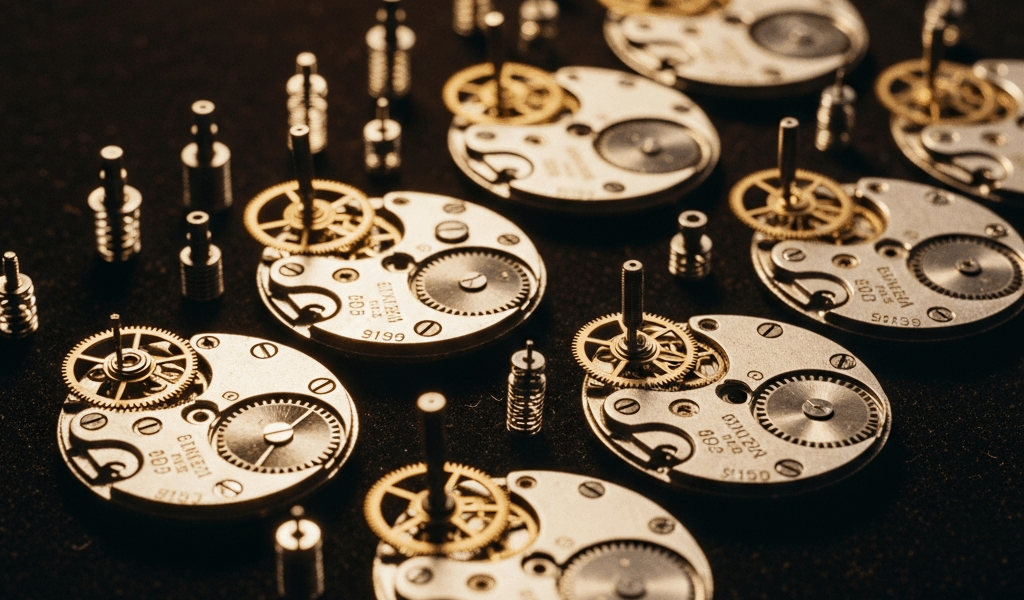
Vintage Seiko 6139 Chronograph Movement Problems — What’s Actually Broken
I’ve spent the last six years collecting and maintaining vintage Seiko chronographs, and the 6139 is hands down the most rewarding movement to own and honestly the most frustrating to troubleshoot. Your 6139 probably just stopped timing mid-race, or the subdials won’t reset, or both — that sick feeling when a movement you trusted fails mid-function, I know it well. Here’s what I’ve learned: most 6139 issues aren’t catastrophic, but they do require understanding exactly what’s worn before you hand it to a service center and drop $300 on a guess.
The 6139 is a masterpiece of 1970s engineering, but it wasn’t designed to run forever without maintenance. Unlike modern quartz chronographs, this mechanical movement has dozens of friction points. Age finds every single one.
Why 6139 Chronographs Stall Mid-Timing
The most common culprit isn’t user error. It’s the chronograph cam — the real killer.
The 6139’s camming system synchronizes all those subdial seconds, minutes, and hours through precise contact between hardened steel surfaces. A thousand resets later, these cams develop tiny flat spots. You press the start pusher, the cam engages, but friction from wear means the rotor doesn’t spin freely anymore. The chronograph ticks once or twice, then just hangs there.
I made the mistake of running my first 6139 hard for three months straight without service. Testing every pusher, every reset function. When the 10-second subdial started lagging, I actually thought I’d broken it permanently — didn’t realize I was just looking at worn cams.
Here’s why the 6139 is particularly vulnerable: Unlike modern Zenith movements or even Seiko’s later 7750 derivative, the 6139 uses a smaller, simpler cam system with less surface area for load distribution. The clutch wheel that engages the cam operates under constant spring pressure — after fifty years, that friction spring is exhausted. The cam itself develops micro-wear that compounds the problem. Seiko built these movements to last a generation, not a century. Nobody predicted enthusiasts would still be wearing them in 2024.
Quick Diagnostics Before You Panic
Before spending $300 on a professional service, run these tests yourself. They take twenty minutes, honestly.
First: listen carefully with the watch held to your ear. Start the chronograph pusher. You should hear a distinct ticking from the subdial mechanism — usually a rhythmic 10-per-second pulse. Silence or a single tick that stops means the chronograph rotor is binding. That’s cam wear or a seized friction spring.
Second: watch the subdials while the main movement ticks. The chronograph should advance visibly with each second hand rotation. Pop off the caseback (if you’re comfortable doing this) and look directly at the subdial train. Main hand moves but subdials don’t? The issue is isolated to the chronograph module — good news, actually. Easier to address than a seized mainspring.
Third: test the reset pusher. It should feel spring-loaded and responsive. Press it three or four times. Inconsistent resistance — sometimes tight, sometimes loose — means you’ve got a worn reset cam or friction spring. Uniformly stiff? The issue might be oil viscosity or corrosion, which a cleaning can fix.
Fourth: manually spin the rotor with a clean finger (caseback off). It should rotate smoothly for a full revolution without catching. Any grinding sensation, any dead spots — that’s internal wear. That’s not fixing itself with fresh oil.
A watch that ticks normally but won’t chronograph is usually just dehydrated. One that ticks sporadically and won’t chronograph has mechanical damage. Learn the difference before you commit to service.
Subdial Not Returning to Zero
This problem exists independently from chronograph stalling, which confuses people. You can have a perfectly functional chronograph that won’t reset.
The reset mechanism depends on a friction spring pushing the subdial hand back to zero. Simple concept, brutal tolerances. The spring — a thin steel ribbon on the movement’s back plate — provides exactly the right amount of force to snap the hand home without overshooting. Wear that spring by 0.05mm, and the hand creeps back slowly instead of jumping. Wear it more, and it stops resetting entirely.
Reset issues tend to appear five to ten years before outright chronograph failure, in my experience. The reset spring fatigues faster because it cycles independently from the main chronograph mechanism. Even in a watch that hasn’t been run hard, the reset function deteriorates.
Check this specifically: press start, wait five seconds, press stop. Now press reset. The subdials should jump back to 12 o’clock. If they move slowly or stop halfway, document exactly which subdials fail to reset. The 10-second dial? The 60-minute dial? This tells your service center whether the issue is the main reset spring or a secondary camming point.
Oil breakdown accelerates this problem considerably. A 6139 that’s been sealed in a dark box for thirty years might reset perfectly until you actually use it. Then the hardened oil viscosity, combined with spring fatigue, becomes obvious within weeks.
When Professional Service Is the Only Fix
Cam replacement runs $180–$400 depending on whether additional wear damage exists. Friction spring replacement is $80–$150. Mainspring failure — rarer but devastating — costs $200–$600 because the entire barrel assembly must be disassembled.
Probably should have opened with this section, honestly, because cost matters when you’re deciding whether to service or sell.
Before you book service, find your movement’s serial number — it’s usually engraved on the balance cock or mainplate. Cross-reference it with 6139 production dates (1969–1980). Certain serial ranges had design variations, and parts availability differs. A 1973 6139-7000 and a 1978 6139-7100 use slightly different cam profiles. Some service centers stock parts for common years; others order them weeks out.
Reputable technicians familiar with 6139 movements advertise openly on Seiko forums and collector groups. I won’t name specific services here because reputation changes, but look for someone who publishes detailed writeups of their work. Ask for references from collectors. A legitimate service center will email you progress photos without being asked — that’s how you know they’re doing actual work.
Jewel wear — damage to the chronograph rotor bearings — sometimes compounds the cam issue. This costs extra and requires full movement disassembly. Get an estimate before committing.
Preventive Care for 6139 Longevity
These watches benefit from deliberate use patterns, not storage.
Run your chronograph once monthly for thirty seconds minimum. This keeps the cam surfaces lubricated and the friction spring responsive. Sitting dormant for years is exactly when these mechanisms seize. Wearing it doesn’t wear it out — neglect does.
Avoid rapid pusher clicks. Press start, pause one full second, press stop. Don’t stab it repeatedly. The cam has finite engagement cycles, and rough handling accelerates wear. I learned this the hard way with my second 6139, which I treated like a modern chronograph. It shouldn’t be.
Full service intervals depend on usage. A 6139 worn daily needs movement service every four to five years. One worn weekly can stretch to seven years. Document service dates and what was corrected — this history matters when selling or maintaining.
Store the watch wound but not pressurized. Let the mainspring tension naturally relax over two weeks after wearing. Keeping a 6139 constantly overwound hardens the lubricants faster.
These movements reward patience and regular attention. They fail suddenly only if you’ve ignored the warnings.

Stay in the loop
Get the latest ichronos updates delivered to your inbox.