What You Actually Get for the Price
Buying a sub-$100 dive watch has gotten complicated with all the conflicting opinions flying around. As someone who has worn the Casio MDV106 daily for going on two years now, I learned everything there is to know about what this watch actually delivers. Today, I will share it all with you.
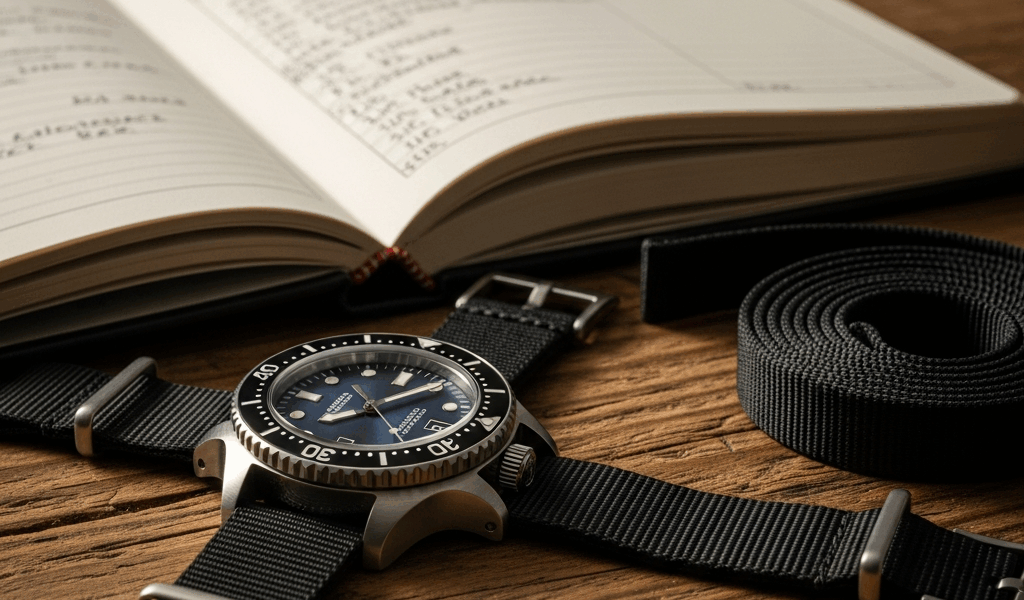
The spec sheet reads like something borrowed from watches costing triple the price. 200-meter water resistance. A unidirectional rotating bezel with a lume-filled marker. Miyota 2115 quartz movement. 42mm stainless steel case. Good numbers on paper — but what stopped me cold when I unboxed mine was the weight. Not in a bad way. This thing sits on your wrist with genuine density. Real heft. Nothing about it says “plastic pretending.”
The bezel clicks. Not the silky rotation you’d feel on a $3,800 Seiko Marinemaster, but firm and deliberate. Probably should have opened with this section, honestly — cheap bezels betray a watch faster than anything else, and the MDV106 doesn’t betray you.
The dial is stripped back to essentials. Applied lume indices, Mercedes hands, date window at 3 o’clock. That’s it. The lume is serviceable — not SKX007 bright, but functional when you’re actually underwater or fumbling around in a dark room at 2am. No complications trying to justify the price tag. Just a face that does its job.
Lug width is 22mm. That small detail opens up a surprisingly wide world of aftermarket straps if the factory bracelet bothers you — and it might. More on that shortly.
How It Wears on the Wrist Day to Day
The case is 42mm, but the lug-to-lug sits around 48mm. That gap matters enormously. On my 6.75-inch wrist it balances without drama. Smaller wrists will notice it more. Larger wrists might wish it pushed bigger. I’m apparently a perfect middle ground and the MDV106 works for me while other 42mm cases never quite settle the same way.
The bracelet uses solid end links — not hollow, a genuine surprise at this price. The clasp is a diver’s extension type, which you’ll want if you ever plan to strap this over a 3mm wetsuit. The mechanism is stamped metal rather than screw-fitted. Two years of daily wear and it hasn’t rattled once.
Total weight with the bracelet hovers around 170 grams. Light enough to forget about during a long shift, heavy enough to feel intentional. I’ve worn it back-to-back against my SKX007 for comparison — they’re nearly identical in this department, which tells you something.
Now. The resin strap that ships with certain versions. Don’t make my mistake — I wore mine for three weeks thinking it would break in. It didn’t. Stiff, uncomfortable, looks cheaper than the watch underneath it deserves. Budget another $20–$30 for a rubber replacement from Barton or Crafter Blue the moment it arrives. I went with a Crafter Blue CB01 in black, around $22 shipped. Night and day difference. Consider it a mandatory upgrade tax, not an optional one.
The solid stainless caseback screws down cleanly. Engravings are crisp. I’ve taken this into pools without a second thought — though I’ll be honest, my deepest dive in this thing was probably 4 meters, not 200.
Movement and Accuracy — What to Expect
But what is a Miyota 2115, really? In essence, it’s a mass-produced Japanese quartz workhorse. But it’s much more than that — at least in terms of what it means for daily reliability.
My unit runs about +5 seconds per month. That’s exceptional. Battery life is somewhere between 24 and 30 months depending on usage. I replaced mine at 26 months on the nose — a standard CR2016, maybe four minutes of work with a caseback tool and a steady hand.
I used to feel slightly embarrassed defending quartz in watch communities that worship mechanical movements. Then I actually lived with the SKX007 alongside this for six months straight. The SKX drifted 15 to 20 seconds daily depending on how I slept with it. The MDV106 just ran. Quietly, accurately, without asking anything from me.
The seconds hand sweeps — no step-tick. It’s a small thing. Oddly hypnotic.
Service costs for quartz are negligible. That is because there’s almost nothing to service. No mainspring, no jeweled escapement, no regulation required. For a genuine tool watch — one that actually sees water and impact and rough handling — quartz eliminates variables that matter. Most reviewers undersell this because it sounds less romantic than sweeping movements and chronograph rattrapante complications. It’s still true.
Where It Falls Short — Be Honest
The bracelet finishing shows under scrutiny. Polished center links, brushed outers, and a visible mismatch in refinement where the two meet. That’s what makes budget tool watches endearing to us entry-level collectors — the trade-offs are right there in the open, not hiding behind marketing copy.
The bezel lume insert is painted, not printed or ceramic. Mine has a small chip on the 10-minute marker from a doorframe encounter I was definitely not paying attention to. The SKX007 runs a ceramic insert that doesn’t chip. Real difference. Worth knowing before you buy.
The lug transitions between polished and brushed surfaces lack the careful blending you’d find on a $350–$400 Seiko Prospex. Fine from arm’s length. Utilitarian under a loupe.
The crown screws down but the engagement feels loose-ish — not alarming, but you notice it. Especially if you’ve handled watches in the $200+ range where crown lock feels mechanical and confident. I’ve had zero water intrusion in two years. Still. You’re aware of the compromise.
These aren’t dealbreakers. They’re the honest cost of spending $70 instead of $250. So, without further ado — here’s the actual verdict.
Should You Buy the Casio MDV106 — Final Verdict
This new category of ultra-affordable tool watch took off several years ago and eventually evolved into the segment enthusiasts know and debate today — and the MDV106 sits near the top of that conversation for good reason.
While you won’t need deep pockets, you will need a handful of realistic expectations. First, you should buy this watch — at least if you’re someone who wants a functional diver to actually use rather than display. The MDV106 might be the best entry option, as honest tool-watch ownership requires learning what you actually value. That is because most people don’t know until they’ve worn something capable enough to test it against real use.
If you’re a collector chasing finishing depth and resale value, pass. Add $150 and pick up an SKX007 or a vintage Invicta Pro Diver 8926OB. Those hold value in a way the MDV106 never will.
But if you dive recreationally, use your watches instead of admiring them, and want something that won’t ruin your afternoon when it gets scratched — this watch was made for you. It’s capable. Unpretentious. Built to work rather than impress.
Yes, the Casio MDV106 is genuinely worth buying. Just understand exactly who it’s worth buying for.

Stay in the loop
Get the latest ichronos updates delivered to your inbox.