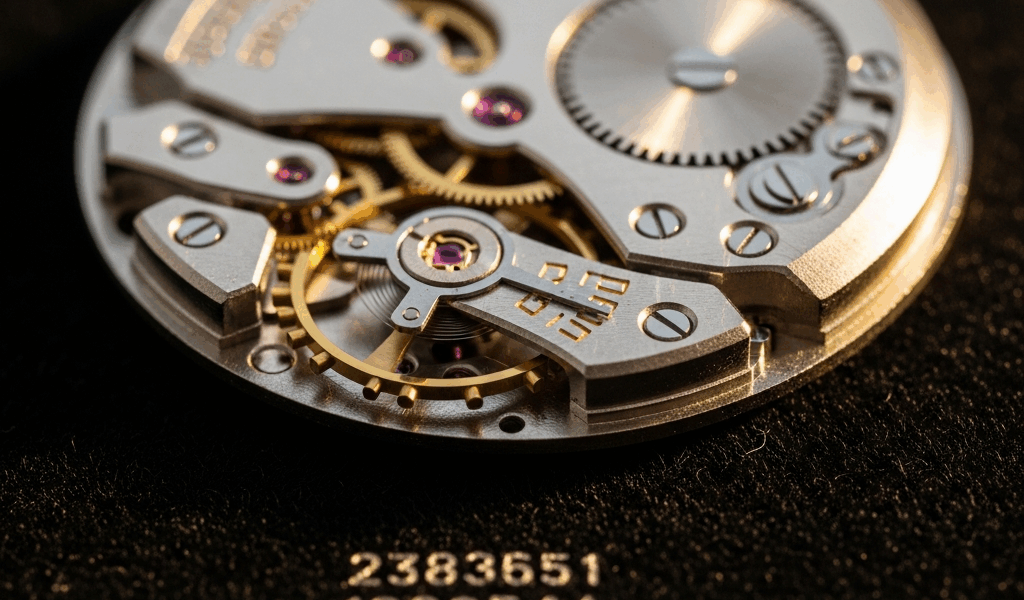
Why Movement Serial Numbers Actually Matter
Watch serial numbers have gotten complicated with all the misinformation flying around. So let me cut straight to it. A movement serial number tells you three things: when your watch was made, whether it’s genuine, and exactly which variant you’re holding. I learned this the hard way after picking up a supposedly 1980s Seiko at an estate sale — paid $140 for it, felt pretty good about myself — only to discover through the movement serial that it rolled off the line in 1995. Don’t make my mistake.
Movement serials aren’t glamorous. They’re stamped onto metal plates hidden inside your watch, invisible until you crack open the caseback. But they’re everything if you care about provenance, value, or just knowing what you actually own. Most guides bury the useful stuff under layers of jargon. Today, I will share it all with you — including the parts other writeups skip.
Where to Find the Serial Number on Your Movement
Finding the serial depends on your specific movement and case design. Some movements sit right there behind a display caseback. Others require full disassembly. Start here before you touch anything.
Caseback-Visible Movements
If your watch has a clear or skeletonized caseback, you’re already ahead. Look directly at the movement. The serial is typically stamped on one of these surfaces:
- The main plate — the large metal foundation everything else sits on
- The rotor edge — that weighted oscillating wheel on automatics
- A bridge spanning the barrel or balance wheel
Seiko movements almost always put it on the main plate or rotor. Miyota favors the rotor edge itself. You’ll want decent lighting and probably a 5x loupe — the stamping is shallow, and decades of dust don’t help.
Movements Requiring Case Opening
Most watches require opening the caseback entirely. If you’re not a watchmaker or experienced hobbyist, this is where you stop. Seriously. Cracking a sealed case risks dust contamination, bent gasket tabs, stripped screw slots. A local repair shop charges $15–$30 to pop a caseback safely. Worth every penny.
If you do open it yourself, the serial lives in the same spots described above. Write it down immediately. Take a photo under magnification. Serials fade, and you may not open that case again for years.
Decoding Seiko Serial Numbers — Year and Month Breakdown
Probably should have opened with this section, honestly — it’s the most common question I see across watch forums. Seiko’s system is elegant once you get it. Their alphanumeric serials encode the decade, year, and production month directly into the first three characters.
Here’s the key table:
| Position 1 (Decade) | Character | Decade |
| M | 1960s | |
| N | 1970s | |
| P | 1980s | |
| R | 1990s | |
| S | 2000s | |
| T | 2010s | |
| U | 2020s |
Position 2 (Year within decade) — Read the number directly. A “3” means the third year of whatever decade Position 1 identifies.
Position 3 (Month) — Letters A through L represent January through December. A is January. L is December. Simple.
Real Example: Breaking Down a Serial
Say your movement reads P8E followed by additional digits.
- P = 1980s
- 8 = Eighth year of the decade = 1988
- E = Fifth letter of the alphabet = May
Result: May 1988. That’s your manufacturing date — month and year, locked in.
Another one: S2G
- S = 2000s
- 2 = Second year = 2002
- G = Seventh letter = July
July 2002. That was a good year for Seiko movements, for what it’s worth.
The Pre-1980 Problem
Before 1980, Seiko ran a different system entirely. Serials starting with M or N get ambiguous fast — you can narrow it to the 1960s or 1970s, but pinning down an exact year requires cross-referencing the caliber number against Seiko’s archived records. Stop relying on the serial alone at that point. Check the case reference number instead. That’s not a workaround — it’s actually the more reliable path.
How ETA and Miyota Number Their Movements
ETA and Miyota don’t publish their decoding systems the way Seiko does. Frustrating — but that’s the honest reality.
ETA Serials
ETA movements — manufactured by the Swatch Group, found in countless brands worldwide — encode batch and production line data rather than calendar dates. A serial like 2023 4A tells the factory which batch and facility produced it. You won’t reverse-engineer a manufacture year from it without ETA’s internal records. Your best approach: match the caliber number to known production windows. The ETA 2824-2, for instance, has been in continuous production since 1982. Pinning down a specific year means leaning on original case documentation or contacting the brand directly.
Miyota Serials
Miyota — owned by Citizen — stamps their movements in a format that superficially resembles Seiko’s alphanumeric style but follows different internal rules. The serial usually appears on the rotor edge rather than the main plate. I’m apparently a Miyota skeptic, and honestly the opacity of their system is a big reason why. Like ETA, the exact decoding key isn’t public. Miyota movements are cheaper than ETA and extremely common in mid-range watches — dive watches, field watches, dress watches. If you own one, the caliber number tells you more than the serial ever will.
Orient Movements
Orient — also Citizen-owned, interestingly enough — uses simple date codes on their in-house movements. Look for a three-character stamp: two digits and a letter. The letter represents the year within a 10-year cycle; the digits encode the month. It’s closer to Seiko’s approach in terms of transparency, but documentation is scattered across collector sites rather than centralized anywhere official. Cross-referencing with community databases beats trying to decode it cold.
What To Do If the Number Is Worn or Unreadable
A worn or illegible serial doesn’t mean you’re holding a fake. Movements get handled, polished, and serviced repeatedly over 40, 50, sometimes 60 years of use. Metal wears. Technicians occasionally rebuff surfaces. This happens to completely legitimate watches all the time.
Here’s your fallback plan:
- Use the caliber number instead. Stamped separately and often far more durable. Match it against Ranfft (ranfft.de) or Seiko’s official caliber archives — both are free and genuinely useful.
- Cross-reference the case reference number. The caseback usually carries a reference code that narrows down the production year more precisely than the movement serial alone.
- Check WatchUSeek forums. Specific model communities have been accumulating data for decades. Post a clear photo of your dial, caseback, and movement — collectors will help, and fast.
- Contact Seiko Heritage directly. For vintage Seikos specifically, their archives can sometimes confirm a production year based on caliber and case details combined.
A faded serial is background noise — not a red flag. The bigger picture matters more: dial condition, case finishing, movement architecture. Those elements tell the real story. That’s what makes physical provenance endearing to us collectors. So, without further ado, go find that serial and start reading.



Stay in the loop
Get the latest ichronos updates delivered to your inbox.