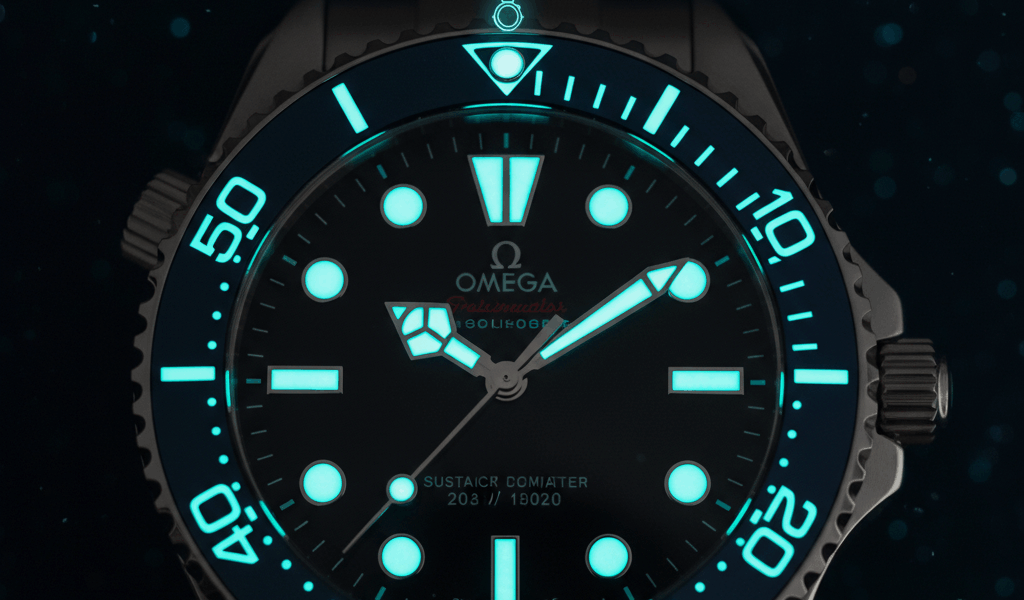
Watch luminescence has gotten complicated with all the different technologies and marketing claims flying around. As someone who has compared lume performance across hundreds of watches, I learned everything there is to know about why some watches glow all night while others fade in minutes. Today, I will share it all with you.
You’ve noticed it: some watches glow brilliantly for hours after sunset, while others fade within minutes of leaving the light. The difference isn’t quality or price point, it’s luminescent technology. Understanding what makes your watch glow reveals fascinating chemistry and explains why some dials outperform others dramatically.
The Three Generations of Lume
Watch luminescence has evolved through three distinct technologies: radium (1910s-1960s), tritium (1960s-1990s), and photoluminescent compounds like Super-LumiNova (1990s-present). Each works on fundamentally different principles, explaining the dramatic performance variations you observe.
Radium: The Dangerous Pioneer
Probably should have led with this section, honestly. Early luminous dials used radium-226 mixed with zinc sulfide. Radium’s radioactive decay constantly excited the zinc sulfide, creating persistent glow that literally never faded, at least until the radium decayed (half-life: 1,600 years). This was spectacular but deadly. The Radium Girls who painted these dials developed radiation poisoning, and the scandal eventually ended radium dial production.
Vintage radium watches still exist in collections. The radium has typically exhausted the zinc sulfide’s luminescent capacity, so they no longer glow. They remain mildly radioactive and should be handled with awareness, though normal wear poses minimal risk. Opening the case or disturbing degraded lume is inadvisable.
Tritium: The Stable Compromise
That’s what makes tritium endearing to us vintage collectors—it replaced radium starting in the 1960s with a much safer solution. Tritium, a hydrogen isotope with much lower radiation energy, emits beta particles that excite phosphor coatings, creating glow without dangerous gamma radiation. You’ll recognize tritium dials by the “T” markings below the 6 o’clock position, often with a radioactivity symbol.
Tritium has a half-life of only 12.3 years, meaning vintage tritium dials from the 1970s have lost most of their luminosity. A 50-year-old tritium watch will barely glow or not at all. This aging affects collectability, with bright tritium dials commanding premiums as increasingly rare.
Modern Super-LumiNova: The Light Battery
Super-LumiNova and its variants (BGW9, C3, X1) work on completely different principles. These photoluminescent compounds absorb light energy and re-emit it as visible glow. They’re essentially light batteries, charging from any light source and discharging over hours. No radioactive materials involved.
Performance depends on two factors: charge intensity and compound grade. Bright sunlight produces stronger charges than dim indoor lighting. Higher-grade compounds (BGW9 is brighter than C3, X1 is brighter still) produce more intense and longer-lasting glow. The best applications can provide readable luminescence for 8+ hours after brief light exposure.
Application thickness matters significantly. A thin printed layer glows weakly regardless of compound quality. Thick, generously applied lume glows intensely. This is where quality varies dramatically between watches, even those claiming the same compound grade. A $100 Seiko can outperform a $1,000 Swiss watch if the lume application is more generous.
Evaluating Lume Performance
Test watches in comparable conditions. Charge both under the same light source for the same duration. Check glow intensity after one hour, not immediately after charging. The initial burst fades quickly; sustained glow reveals true performance.
Real-world performance matters more than marketing claims. “Super-LumiNova” encompasses a wide range of compounds and application qualities. Two watches both claiming Super-LumiNova can perform dramatically differently.
When Lume Matters
Tool watches intended for actual dark environments need excellent lume. Dive watches, military watches, and true aviation pieces should glow readable for hours. Test before relying on these watches in critical situations.
Dress watches and fashion pieces rarely need strong luminescence. If the watch exists primarily for daytime aesthetics, lume performance is secondary to other considerations. Don’t pay premiums for excellent lume on a watch you’ll never check in the dark.

Stay in the loop
Get the latest ichronos updates delivered to your inbox.