
Watch accuracy claims have gotten complicated with all the COSC certifications and chronometer designations flying around. As someone who has timed dozens of watches against atomic references, I learned everything there is to know about what these accuracy numbers actually mean in practice. Today, I will share it all with you.
What COSC Certification Actually Means
COSC (Controle Officiel Suisse des Chronometres) tests movements across 15 days in five positions and three temperatures. To pass, a movement must average between -4 and +6 seconds per day. About 3% of Swiss movements submitted receive certification. Sounds rigorous, and it is—for the testing period.
Probably should have led with this section, honestly. The certification applies to the movement before casing, tested on automated machinery in laboratory conditions. Once the movement goes into a case, gets attached to dial and hands, and straps onto a wrist experiencing unpredictable motion and temperature, real-world performance often diverges from test results.
A COSC-certified movement might run +5 seconds daily in testing but +10 or -5 on your wrist. The certification establishes capability, not guaranteed performance.
Beyond COSC: METAS and In-House Standards
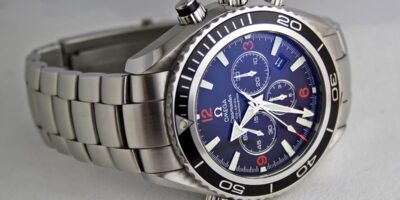
Omega’s Master Chronometer certification adds magnetic resistance testing to 15,000 gauss, accuracy testing after casing, and real-world simulation. That’s what makes this advancement beyond COSC endearing to us accuracy obsessives—it tests what you actually wear.
Rolex’s Superlative Chronometer standard tests cased watches to +/-2 seconds per day, stricter than COSC and applied after complete assembly. This explains why Rolex accuracy reputation often exceeds generic COSC pieces.
Grand Seiko’s VFA standard achieves +/-3 seconds daily through meticulous hand-adjustment by master craftsmen. Japanese precision matches or exceeds Swiss certification through different methodology.
The Quartz Reality Check
A basic $30 quartz watch maintains accuracy around +/-15 seconds per month. That’s roughly 0.5 seconds per day—an order of magnitude better than any mechanical chronometer. A COSC-certified mechanical considered excellent at +2 seconds daily is five times worse than entry-level quartz.
High-accuracy quartz achieves even better. The Breitling SuperQuartz maintains +/-10 seconds per year. The Citizen Caliber 0100 and Grand Seiko 9F achieve +/-5 seconds per year. These are 100 times more accurate than the best mechanical chronometers.
Thermo-compensated quartz automatically adjusts for temperature-induced frequency drift. This delivers astronomical accuracy at prices far below mechanical chronometers.
Why Accuracy Obsession Misses the Point
If pure accuracy determined watch value, everyone would wear Grand Seiko quartz or Citizen Chronomaster. Mechanical watches would be museum pieces. That the opposite occurs reveals accuracy isn’t the actual value proposition.
Mechanical watches sell on craftsmanship, tradition, emotional connection, and appreciation of engineered complexity achieving impressive accuracy despite physical limitations. A mechanical movement keeping time within seconds daily through purely mechanical means is genuinely remarkable, even though quartz surpasses it easily.
COSC certification serves as quality assurance that a movement meets high standards. It signals manufacturer investment in precision. Whether the specific parameters matter for daily wear is beside the point.
Practical Accuracy Management
For mechanical watches, expect +/-10 seconds daily as normal, with +/-5 indicating excellent regulation. Check accuracy with a timing app or atomic time reference (time.is works perfectly) over several days. Single-day measurements vary too much.
If your mechanical runs beyond +15 or -10 seconds daily, service might help. Magnetic exposure commonly degrades accuracy; demagnetizers are inexpensive solutions. Position affects rate—experiment with crown-up versus dial-up overnight storage.
For quartz, battery condition affects accuracy near end-of-life. If previously accurate quartz starts running fast or slow, try fresh battery first.
The Honest Conclusion
COSC certification indicates quality manufacture. It doesn’t guarantee accuracy surpassing decent quartz, nor promise certified rates persist throughout ownership. Quartz wins objective accuracy by margins so large comparison seems unfair.
But accuracy isn’t why most buy mechanical watches. The certification badge signals investment in quality that buyers value regardless of whether they ever check against atomic time. Know what you’re paying for, accept mechanical limitations, enjoy your chronometer for what it represents rather than expecting quartz performance from mechanical engineering.



Stay in the loop
Get the latest ichronos updates delivered to your inbox.