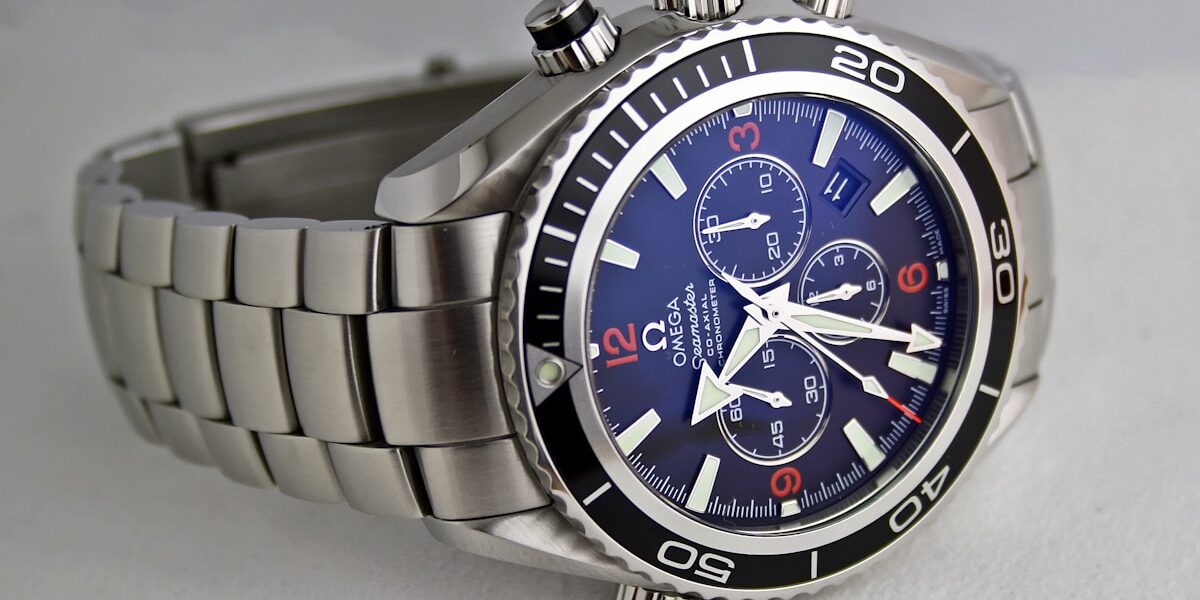
Dive watches, pilot watches, and field watches have gotten complicated with all the heritage marketing and reissue hype flying around. As someone who owns pieces from each category and has worn them all in their intended environments, I learned everything there is to know about what actually distinguishes these tool watch types. Today, I will share it all with you.
The Dive Watch: Underwater Necessity
Dive watches emerged when underwater professionals needed timing devices that could survive submersion. That’s what makes understanding their features endearing to us watch collectors—every design element solves a real problem. Water resistance for working depth, unidirectional bezel for elapsed time, luminous hands for darkness, robust construction for pressure.
The unidirectional bezel prevents accidental rotation indicating more remaining air than exists—a safety-critical design. Set the zero marker to the minute hand entering the water; elapsed bottom time stays visible. Simple, reliable, impossible to get dangerously wrong.
Modern dive watch standards (ISO 6425) require 100m minimum water resistance, timing bezel, luminescence, magnetic resistance, and shock resistance. The Submariner, Seamaster, and Prospex define the category, though hundreds of variations exist at every price point.
Most dive watch owners never dive. The robust construction, tool-watch aesthetic, and universal wearability make them popular far beyond intended use. A Submariner looks as appropriate with a suit as with wetsuit.
The Pilot Watch: Cockpit Companion
Aviation watches prioritized legibility, magnetic resistance, and navigation complications. Large cases ensured readability at a glance. Oversized crowns permitted operation with gloved hands. Anti-magnetic shielding protected against cockpit interference.
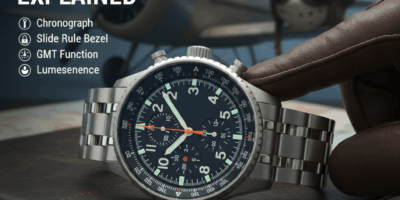
Classic pilot watch features include Type A or B Flieger dial designs, slide rule bezels for navigation calculations, GMT complications for timezone management, and chronographs for timing legs. The Breitling Navitimer, IWC Big Pilot, and Longines Spirit define contemporary iterations.
Probably should have led with this section, honestly: pilot watches typically run larger than dive watches—42-46mm diameters are common—reflecting cockpit visibility requirements rather than underwater wrist-hugging needs.
Modern aviators use glass cockpit instrumentation rather than wristwatches. But the pilot watch aesthetic remains powerfully appealing. Connection to aviation heritage creates emotional value that purely practical evaluation cannot capture.
The Field Watch: Military Heritage
Field watches evolved from military requirements for reliable timekeeping in ground combat. Legibility, durability, and simplicity dominated design. No unnecessary complications to break. No delicate finishing to worry about. Just time-telling reliability in harsh environments.
Classic characteristics include 38-42mm cases, simple dials with Arabic numerals, luminous hands, hack feature for synchronization, and canvas or leather straps. The Hamilton Khaki Field, Bertucci A-2T, and Marathon GSAR represent the category across price points.
Field watches overlap with pilot watches in military heritage but differ in priorities. Pilot watches add aviation-specific complications; field watches prioritize simplicity and reliability. Both serve as nostalgic connections to military history for civilian wearers.
Choosing Your Category
Consider your actual activities and aesthetic preferences:
Dive watches suit those who value robust construction, appreciate the rotating bezel’s utility (however rarely used), and want versatility from beach to boardroom. The category offers the widest selection at every price point.
Pilot watches suit those drawn to aviation, whether professional pilots or enthusiasts. Larger cases and busier dials create commanding wrist presence. Complications like slide rules and GMTs add travel functionality.
Field watches suit those preferring understated simplicity and military heritage. Smaller cases and cleaner dials create subtle wrist presence. Function without complication.
The One-Watch Collection
If limited to a single tool watch, dive watches offer most versatility. Water resistance handles unexpected situations. Styling works with virtually any wardrobe. Options exist at every budget. A quality diver serves as the Swiss Army knife of watches.
For specific interests, alignment matters more. Pilots find pilot watch functionality genuinely useful. Those valuing minimalism might prefer field watch simplicity over dive watch bezel complexity.
Building the Trinity
Serious tool watch collectors often acquire all three categories, each serving different occasions and moods. Dive watch for active days, pilot watch for travel, field watch for casual simplicity. Variety without redundancy, as each serves distinct aesthetic and functional roles.
Understanding origins and intentions of each category helps you appreciate what you’re wearing and why these designs persist decades after their original professional requirements became obsolete.

Stay in the loop
Get the latest ichronos updates delivered to your inbox.