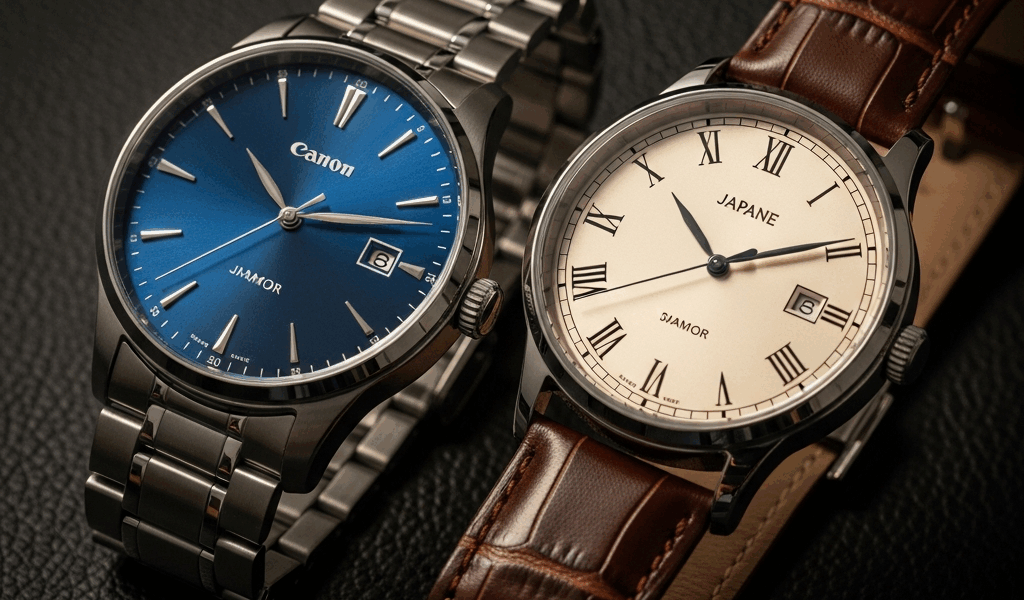
You have somewhere around $300 burning a hole in your pocket, and you want a dress watch that punches way above its weight. The same two names keep surfacing in every forum thread and YouTube comment section: the Seiko Presage Cocktail Time and the Orient Bambino. Both Japanese automatics. Both with fanbases that border on religious. Both look like they should cost three times what they actually do. But they are not the same watch — and picking the wrong one for your wrist and your wallet is a mistake I have watched too many people make.
Specs at a Glance
Numbers first, opinions second. The Presage Cocktail Time — I will use the SRPB41 as the benchmark since it is the one everyone talks about — runs a 40.5mm stainless steel case at 13.2mm thick, hardlex crystal, 50 meters of water resistance. The movement is Seiko’s caliber 4R35 (or 4R57 if you want a day-date complication), giving you 41 hours of power reserve with hacking seconds and manual winding.
The Orient Bambino — the FAC00004B is the one I keep coming back to — sits at 40.5mm too, though certain generations creep up to 41mm. It is thinner at 11.8mm, wears a domed mineral crystal, and offers 30 meters of water resistance. Inside is Orient’s in-house caliber F6724, which now hacks and hand-winds after the upgrade from the older 48743. Power reserve lands around 40 hours.
Side by side on a spec sheet, these two look almost interchangeable. They are not. The differences emerge the moment you pick them up.
Movement and Accuracy
Both calibers are workhorses, but they grew up in different factories with different priorities. The Seiko 4R35 belongs to the enormous 4R family — bulletproof, mass-produced in staggering quantities, and serviceable by basically any watchmaker on the planet. Rated accuracy sits at +45/-35 seconds per day on paper, though mine has consistently run within +/-12 over the last eight months. It beats at 21,600 vibrations per hour, which means six ticks per second. If you stare at the sweep hand long enough, you can just barely see the individual steps.
Orient’s F6724 runs at the same 21,600 vph. Rated accuracy is in the same ballpark, and owner reports on WatchUSeek suggest daily performance is comparable to the 4R35 in most cases. The big deal with the F6724 is what it fixed — older Bambinos could not hack or hand-wind, which meant setting the time was an exercise in frustration. That era is mercifully over.
Bottom line on movements: neither one is going to win you a chronometer competition. Both will keep time reliably enough that you check once a week, adjust by ten seconds, and move on with your life. At this price tier, that is exactly what good looks like.
Design and Finishing
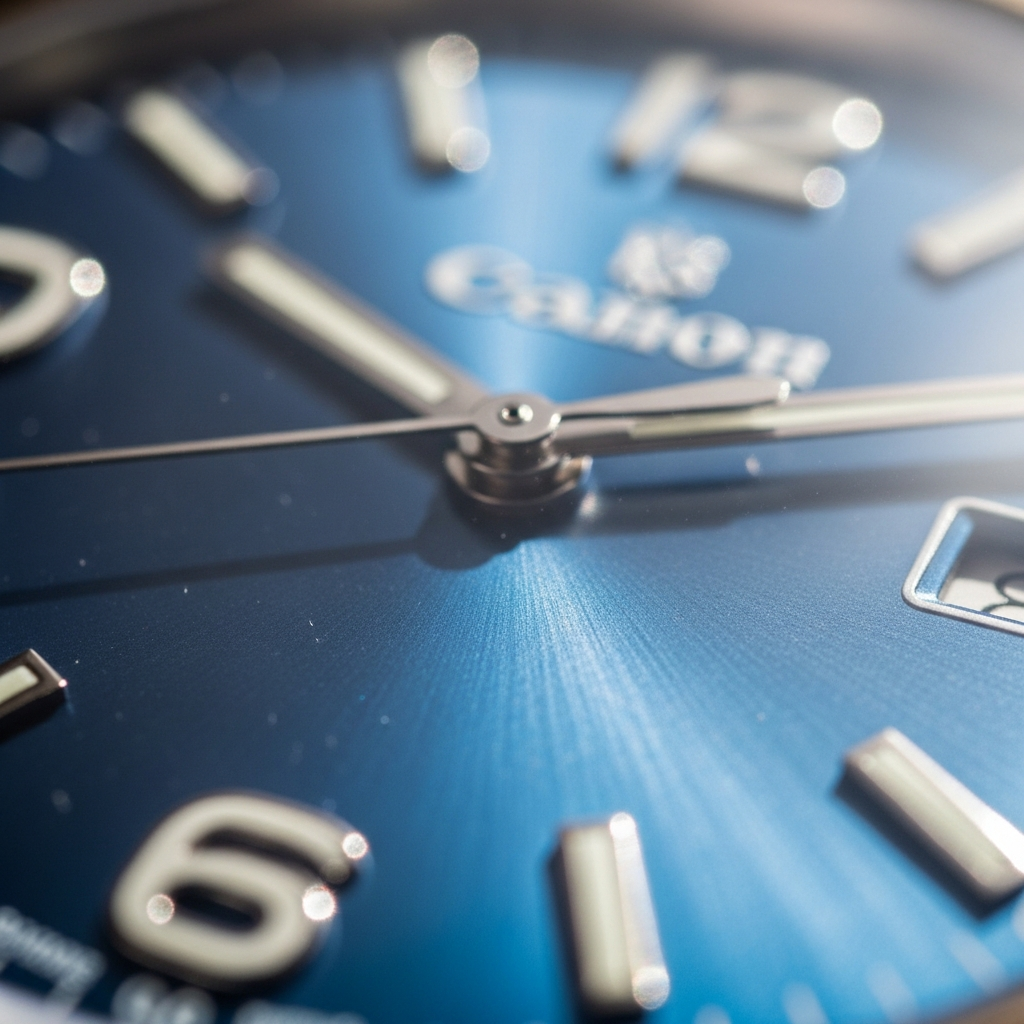
Here is where the gap cracks open. The Presage Cocktail Time built its entire reputation on dial work, and honestly, it earned every bit of that hype. The SRPB41’s blue sunburst dial has a depth and shimmer that genuinely shocks people when you tell them the price. Seiko named the entire line after cocktails served at the Star Bar in Ginza, Tokyo, and the finishing matches that level of ambition. Indices are applied — not printed. Hands are polished to a mirror sheen. Case edges are crisp and deliberate.
The Bambino plays a completely different game. Those sunburst dials are attractive in their own right, and the Roman numeral versions carry a warmth that the Presage never attempts. The domed mineral crystal is the signature move — it bends light across the dial face in a way that flat crystals physically cannot, giving the whole watch a vintage glow. It looks like something you would find in your grandfather’s watch box, and for a lot of buyers, that nostalgic pull is the entire point.
But if you line them up side by side and really look? The Presage wins the build quality contest. Tighter case polishing. Cleaner bracelet link tolerances on models that ship with one. Sharper dial printing. This is not me bashing Orient — I own a Bambino and I wear it regularly. It is just the honest reality of what an extra $200 buys you in this segment. Put both under a loupe, and the Seiko looks like the more expensive watch. Because it is.
On the Wrist
The Presage SRPB41 at 40.5mm and 13.2mm thick has presence. That is the polite way of saying it sits tall on the wrist. On its steel bracelet, it carries noticeable weight — not heavy enough to be annoying, but enough that you always know it is there. Swap to a leather strap and the visual profile slims down, but that case height stays. I have 7-inch wrists and it works fine. On anything under 6.5 inches, particularly with a dress shirt cuff that needs to slide over it, the Presage can feel like a lot of watch.
The Bambino, despite the nearly identical dial diameter, wears like a different animal. At 11.8mm thick, it sits noticeably flatter. The domed crystal adds visual height when you look at it from the side, but your cuff does not care about visual height — it cares about actual case thickness, and the Bambino wins that math. The historical catch was lug-to-lug span. Older Bambino generations had lugs that overhung smaller wrists badly. Version 5 trimmed that problem, and the 38mm Small Seconds variant finally gave people with slender wrists a legitimate option.
One practical note: every Bambino ships on leather. Keeps the weight down, keeps the profile slim, looks great out of the box. If you want a bracelet, you are shopping aftermarket — which is fine but adds $40-80 to the total cost and changes the watch’s personality. The Presage on its factory bracelet? Complete package, day one. And the bracelet quality is legitimately impressive for a watch in this range.
The Verdict
Best for formal wear: Orient Bambino. The thinner case slides under a shirt cuff without a fight. The domed crystal gives it a dressier silhouette than the chunkier Presage, which reads more sport-dressy than pure dress watch.
Best value: Orient Bambino, and honestly it is not even a debate. At $150-200 new, you get a hacking, hand-winding Japanese automatic with legitimate dress-watch DNA. Name another watch at that price that comes close. I will wait.
Best for small wrists: Orient Bambino Small Seconds at 38mm. Trimmed lugs, proper proportions, real dress watch presence without the overhang. Seiko does not make a Presage equivalent this compact.
Best daily wearer: Seiko Presage. Better water resistance (50m versus 30m), superior finishing that holds up to daily scrutiny, and a bracelet option that makes it genuinely versatile. The extra $200 buys a watch that handles more of your week without needing a backup.
If you can only buy one: Stretch for the Presage if the budget allows it. That finishing gap is real, and you will notice it every single time you glance at your wrist. But if $200 is the ceiling, the Bambino is one of the best deals in watchmaking right now — and wearing one is nothing to apologize for. The Presage is the better-built product. The Bambino is the better deal. Know which one matters more to you, and you have your answer.

Stay in the loop
Get the latest ichronos updates delivered to your inbox.