Pilot watch design has gotten complicated with all the heritage tributes and marketing terminology flying around. As someone who has studied the actual aeronautical origins of these watches, I learned everything there is to know about why pilot watches look the way they do. Today, I will share it all with you.

Aviation watches are among the most iconic tool watches ever created, born from genuine cockpit necessity before glass cockpits and digital instrumentation. The oversized crowns, navigation bezels, and distinctive styling of pilot watches reflect real aeronautical demands, though today they mostly serve as stylish tributes to aviation heritage.
The Big Crown: Gloves and Altitude
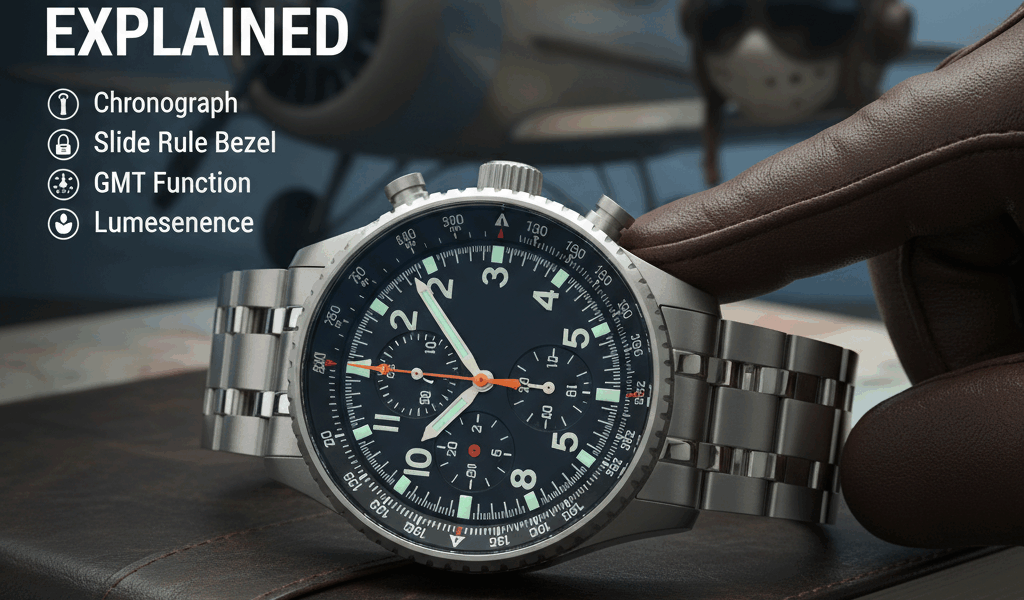
Probably should have led with this section, honestly. The most recognizable pilot watch feature is the oversized crown, often 7-8mm diameter compared to 5mm on standard watches. This isn’t aesthetic affectation. At high altitude, cockpits were unpressurized and brutally cold. Pilots wore thick leather gloves that made operating small crowns impossible. The onion-shaped or oversized crown allowed time setting with gloved hands, a genuine operational necessity.
Modern pilot watches retain large crowns for heritage aesthetics rather than function. Today’s pressurized cockpits don’t require gloves, and most pilots use their phones or aircraft instrumentation for timekeeping. But the big crown remains the visual signature of the category, instantly communicating aviation DNA.
The Flieger Design Language
German Flieger (pilot) watches follow a specific design language established during WWII. Type A dials feature a 12-hour chapter ring with prominent triangular index at 12 o’clock and large Arabic numerals. Type B dials reverse this, with an outer minutes chapter ring and inner hours ring, optimizing for quick minute readings during navigation calculations.
That’s what makes this design language endearing to us aviation enthusiasts—the oversized case diameter, typically 40-45mm historically, ensured legibility under stress and variable lighting. Luminous hands and indices were essential for night operations. The overall aesthetic prioritized function so completely that Flieger watches have an almost industrial beauty, form following function absolutely.
The Slide Rule Bezel: Analog Computation
The slide rule bezel, made famous by the Breitling Navitimer, represents the most complex pilot watch complication. This circular slide rule allows pilots to perform multiplication, division, unit conversions, and aviation-specific calculations like fuel consumption, airspeed, and flight time estimation, all without batteries or electronics.
Operating a slide rule bezel requires understanding logarithmic scales. The outer rotating bezel and inner fixed scale can multiply any two numbers by aligning them and reading the result opposite. Specialized markings for nautical miles, statute miles, and kilometers enable quick unit conversions. Dedicated indices for fuel calculation allow range estimation from known consumption rates.
Learning to use a slide rule bezel takes practice but rewards patience. For pilots who master it, the bezel provides backup calculation capability independent of electronic systems. For collectors, simply understanding how the scale works deepens appreciation for the engineering.
GMT and World Time Complications
Pilots crossing time zones need to track multiple times simultaneously. GMT (Greenwich Mean Time) complications add a fourth hand sweeping the dial in 24 hours, allowing pilots to read home time and destination time on a single dial. Some implementations use rotating bezels rather than additional hands.
True world time complications show all 24 time zones on a rotating city ring, allowing instant reading of time anywhere on Earth. These complications serve genuine utility for international travelers and remain among the most practically useful complications available.
Modern Pilot Watch Evolution
Contemporary pilot watches often sacrifice function for fashion. The oversized crowns serve no operational purpose on a desk-bound watch. The slide rule bezels go unused. The military-specification legibility isn’t necessary for checking the time in a boardroom.
But the aesthetic language endures because it works visually. Clean, bold dials read well. Large crowns provide satisfying winding feel. The association with aviation adventure and competence transfers to wearers even when they’ve never touched a yoke. The category sells heritage and aspiration as much as timekeeping.

Stay in the loop
Get the latest ichronos updates delivered to your inbox.