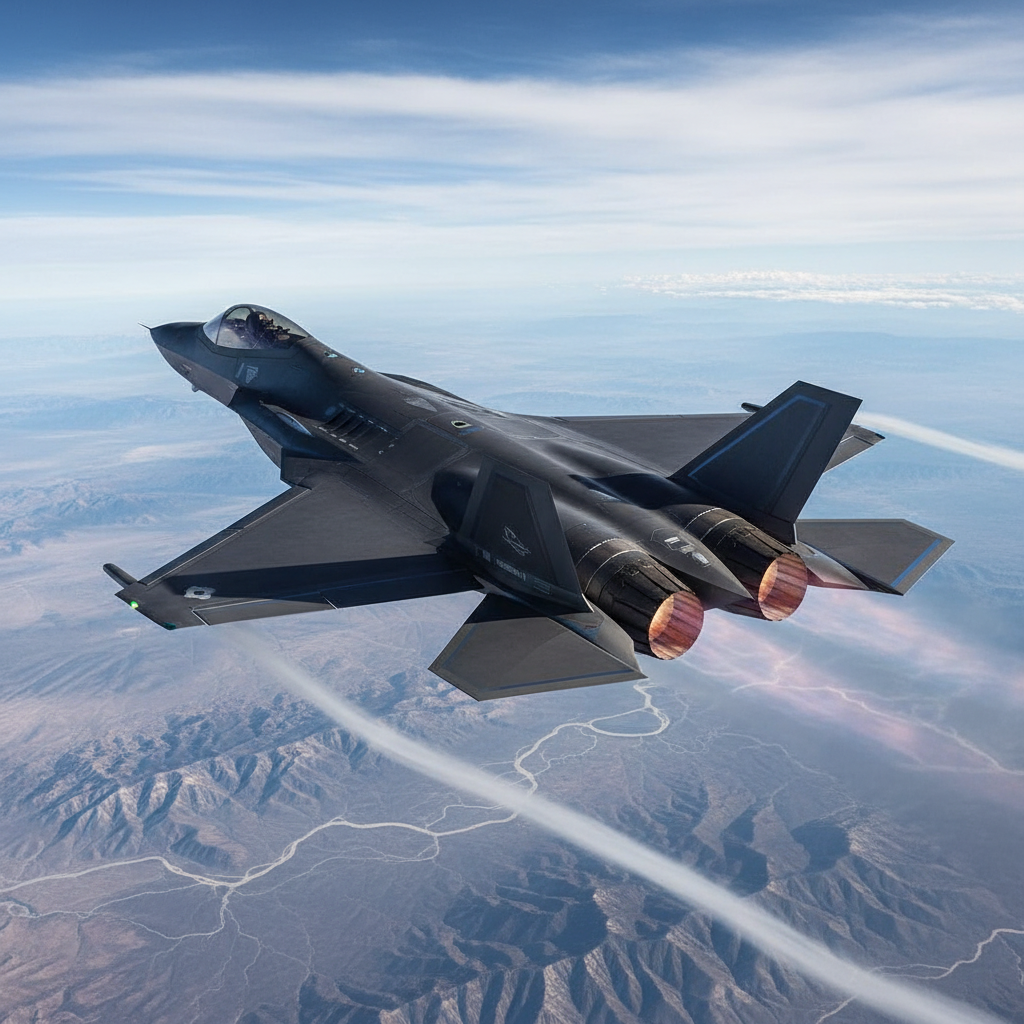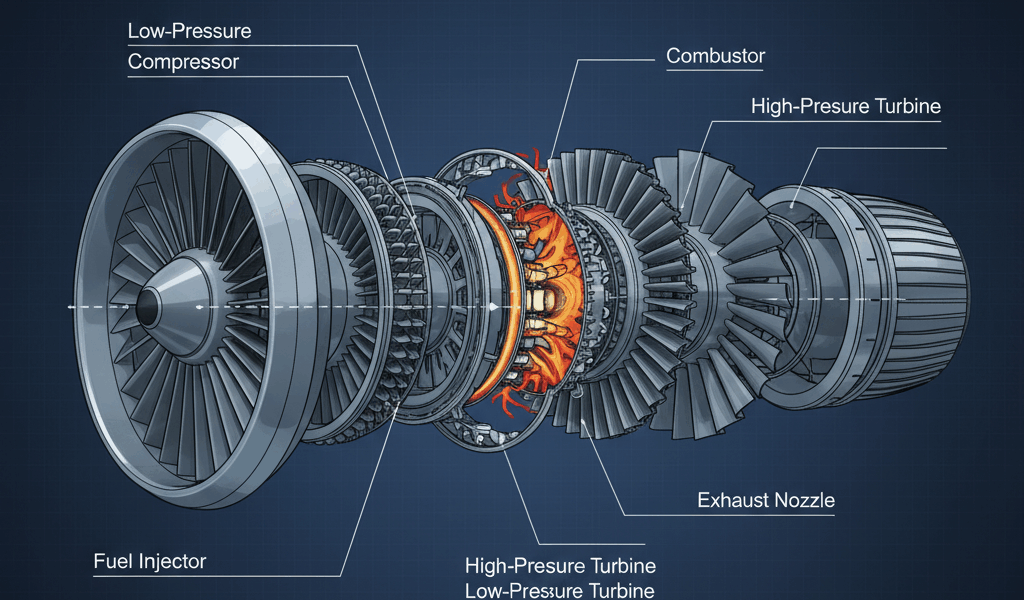
Military jet engine technology has gotten complicated with all the acronyms and classified programs flying around. As someone who has followed aerospace propulsion developments for years, I learned everything there is to know about AETP—the Adaptive Engine Technology Program—and why it matters. Today, I will share it all with you.
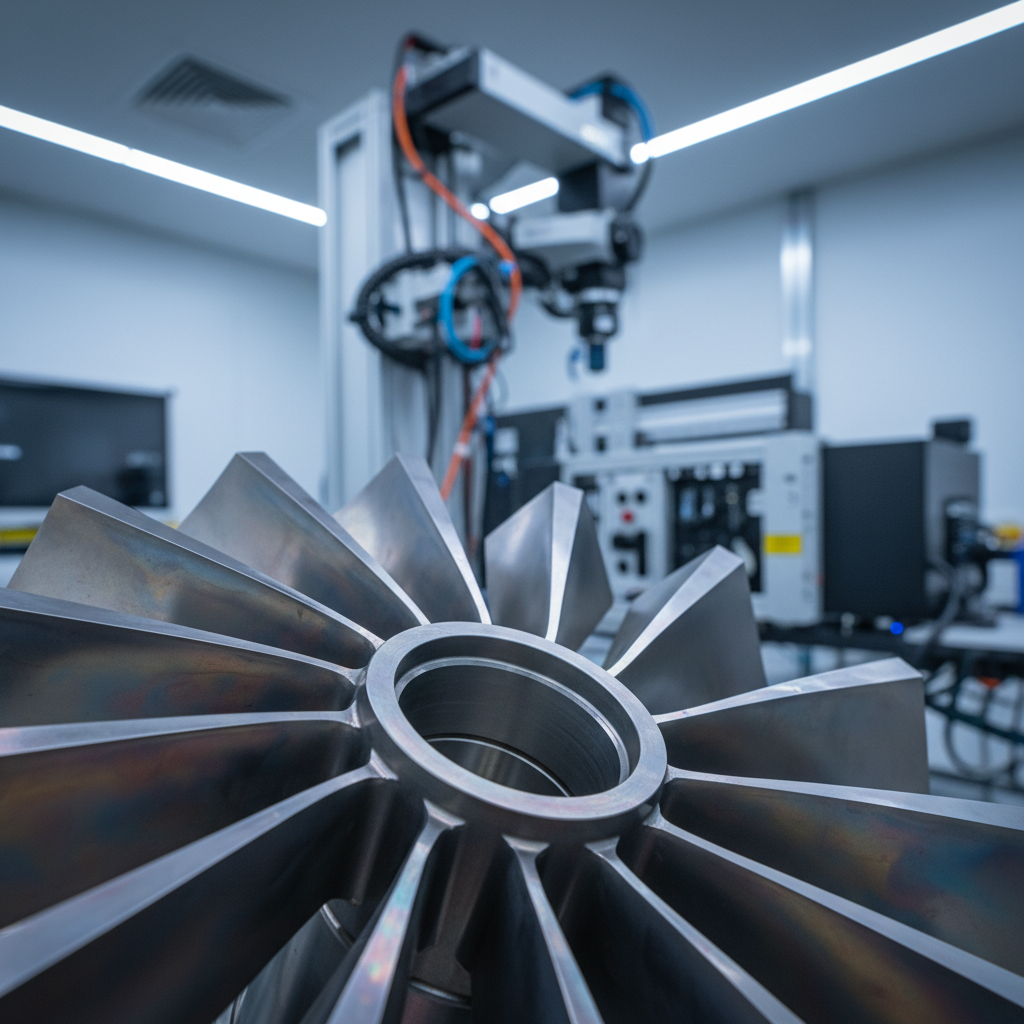
The Adaptive Engine Technology Program represents one of the most significant advances in jet engine technology since the introduction of turbofan engines decades ago. This revolutionary approach to propulsion promises to transform military aviation—and eventually commercial flight—through dramatic improvements in fuel efficiency, range, and performance.
Understanding Adaptive Engine Technology
Probably should have led with this section, honestly. Traditional jet engines operate with fixed geometry—airflow paths, bypass ratios, and compression ratios remain constant regardless of flight conditions. This compromise design optimizes performance for certain conditions while accepting reduced efficiency at others.
Adaptive engines break this limitation by incorporating variable geometry throughout the engine, allowing real-time optimization for current flight conditions.
The Adaptive Cycle Concept
At the heart of AETP is the adaptive thermodynamic cycle. Unlike conventional engines that maintain consistent bypass ratios (the relationship between air flowing through the core versus around it), adaptive engines can vary this ratio during flight.
During high-performance maneuvers requiring maximum thrust, the engine operates in a low-bypass mode, directing more air through the core for increased power. During cruise or subsonic flight, the engine shifts to high-bypass mode, dramatically improving fuel efficiency.
That’s what makes this technology endearing to us aviation enthusiasts—a single engine can now deliver performance across the full flight envelope that would otherwise require multiple specialized engines.
Key AETP Innovations
Variable Cycle Architecture
AETP engines incorporate sophisticated mechanisms that adjust airflow paths:
Third Stream Technology: Beyond the traditional core and bypass streams, adaptive engines add a third airflow stream that can be directed through different paths depending on operational needs. This provides additional degrees of freedom for optimizing performance.
Adaptive Fan: Variable guide vanes allow the fan to adjust its characteristics based on required thrust and efficiency targets. The fan can operate efficiently across a wider range of speeds and pressure ratios than fixed-geometry designs.
Mode Transition System: Advanced controls seamlessly transition the engine between operating modes, managing the complex interactions between variable components to maintain smooth, reliable operation.
Advanced Materials and Cooling
AETP engines operate at higher temperatures than conventional designs, requiring materials innovation:
Ceramic Matrix Composites (CMCs): These advanced materials withstand extreme temperatures while weighing significantly less than metal alloys. CMCs enable higher turbine temperatures, directly improving efficiency and power.
Advanced Cooling Systems: Sophisticated cooling air management ensures critical components remain within temperature limits despite the engine operating at higher core temperatures.
Thermal Management: Integrated thermal management systems use engine waste heat productively, potentially powering aircraft systems or directed energy weapons on military platforms.
Digital Engine Control
AETP engines rely on advanced digital controls that continuously optimize performance:
Full Authority Digital Engine Control (FADEC): Next-generation engine computers process data from hundreds of sensors, making thousands of adjustments per second to maintain optimal performance.
Prognostic Health Management: Embedded sensors and analytics predict maintenance needs before failures occur, improving readiness and reducing lifecycle costs.
AI Integration: Machine learning algorithms analyze engine performance data to refine operating parameters continuously, potentially improving efficiency beyond initial design specifications.
The AETP Program
The U.S. Air Force initiated AETP to develop next-generation propulsion for future fighter aircraft. The program has funded development by both General Electric (with the XA100 engine) and Pratt & Whitney (with the XA101), creating competition that drives innovation.
Program Goals
AETP engines target impressive improvements over current fighter engines:
- Fuel Efficiency: 25% improvement in fuel burn during typical missions
- Thermal Management: Double the cooling capacity for advanced aircraft systems
- Range: Significantly extended operational radius without aerial refueling
- Power: Increased thrust for improved performance
- Readiness: Reduced maintenance burden improving aircraft availability
Testing and Validation
Both contractor engines have undergone extensive ground testing, demonstrating:
- Successful mode transitions across the flight envelope
- Achievement of target thrust levels
- Fuel efficiency improvements meeting or exceeding goals
- Durability through simulated mission profiles
- Integration of advanced thermal management capabilities
Flight testing represents the next phase, validating performance in actual aircraft.
Impact on Military Aviation
Extended Range and Persistence
The 25% fuel efficiency improvement translates directly to extended range or longer loiter time over target areas. For Pacific operations where distances are vast and tanker support limited, this capability provides significant strategic advantage.
Aircraft can reach deeper into contested airspace without refueling, reducing dependence on vulnerable tanker aircraft.
Power for Advanced Systems
Modern fighter aircraft incorporate increasingly power-hungry systems—advanced radars, electronic warfare equipment, and potentially directed energy weapons. AETP engines’ enhanced thermal management and electrical power generation capabilities enable these systems without compromising propulsion performance.
Survivability
Reduced fuel consumption means less fuel weight, improving maneuverability. Additionally, engines operating more efficiently produce lower thermal signatures, potentially enhancing stealth characteristics.
Operational Flexibility
The same aircraft can optimize for different mission profiles—maximum range for deep strikes, maximum power for air superiority, or balanced performance for multi-role missions—simply by how the adaptive engine operates.
Broader Aviation Applications
While AETP focuses on military applications, the underlying technologies have significant commercial potential:
Commercial Aviation Benefits
Fuel Efficiency: Airlines could realize substantial fuel savings, reducing operating costs and environmental impact. A 25% efficiency improvement on commercial engines would revolutionize airline economics.
Performance Optimization: Airlines could optimize engines for specific routes—efficiency priority for long-haul, performance for short-haul with hot-and-high airports.
Noise Reduction: Adaptive fan technology potentially enables quieter operation, particularly during takeoff and landing when noise matters most.
Business and Regional Aviation
Smaller aircraft could benefit from adaptive engine technology scaled appropriately:
- Business jets achieving greater range without size increases
- Regional aircraft operating more economically on short routes
- Improved performance from airports with challenging conditions
Technical Challenges
Adaptive engines represent engineering at the limits of current capabilities:
Complexity Management
Variable geometry throughout the engine creates exponentially more complexity than fixed designs. Ensuring reliable operation across all modes and transitions requires sophisticated engineering and testing.
Control System Development
The engine control systems must manage dozens of variable components simultaneously while ensuring safe, efficient operation. The software and hardware development represents a significant technical challenge.
Maintainability
More complex engines could be more difficult and expensive to maintain. AETP program emphasis on prognostic health management and modular design aims to ensure that increased capability doesn’t compromise maintainability.
Certification and Qualification
Qualifying new engine technology for military or commercial use requires extensive testing demonstrating reliability and safety. The additional complexity of adaptive engines makes this process even more demanding.
Economic Implications
Development Costs
AETP represents a multi-billion dollar investment in engine technology. While substantial, these costs must be weighed against the lifecycle savings from improved efficiency and reduced maintenance.
Competitive Advantage
Nations and companies mastering adaptive engine technology will possess significant competitive advantages in both military and commercial aviation markets. This strategic value justifies substantial investment.
Industrial Base Implications
Developing and producing adaptive engines requires advanced manufacturing capabilities, skilled workforce, and sophisticated supply chains. AETP drives investment in these capabilities, strengthening the industrial base.
Environmental Considerations
Aviation faces increasing pressure to reduce environmental impact. AETP technology directly addresses this challenge:
Emissions Reduction
Improved fuel efficiency directly reduces carbon dioxide emissions. A 25% reduction in fuel burn translates to comparable emissions reduction—significant progress toward aviation sustainability goals.
Altitude Optimization
Adaptive engines could enable aircraft to operate efficiently at different altitudes, potentially avoiding weather or optimizing for atmospheric conditions that minimize environmental impact.
The Path Forward
AETP engines are progressing toward operational deployment. The F-35 fighter represents a potential first application, with the Air Force considering re-engining options. New aircraft designs could be optimized specifically around adaptive engine capabilities.
Moving from prototype to production requires establishing manufacturing processes, supply chains, and quality systems capable of delivering engines at scale while maintaining the precision these complex designs demand.
AETP represents the beginning, not the end, of adaptive engine evolution. Future enhancements will include even higher operating temperatures through materials advances, more sophisticated AI-driven controls, integration with alternative fuels including hydrogen, and hybrid-electric architectures combining adaptive turbines with electric propulsion.
The innovations discovered through AETP will power aviation’s future, proving that revolutionary improvement, not just incremental progress, remains achievable through focused engineering and sustained investment in advanced technology.