Ultra-long-range private jets have gotten complicated with all the “biggest,” “fastest,” “most luxurious” marketing claims flying around. As someone who’s spent years tracking business aviation and the specific client base at this level, I’ve learned everything there is to know about why the Dassault Falcon 10X exists and whether it actually delivers on its considerable claims. Today, I’ll share it all with you.
The Dassault Falcon 10X occupies a specific position in the private aviation market: it is the largest, most expensive, most capable business jet in Dassault’s lineup, and it exists because the people who buy aircraft at this level have concluded that everything else is too small. This is not a criticism of smaller aircraft — the Falcon 7X and 8X are exceptional — it’s a statement about the specific requirements of a client base that needs to fly 13 people across the Atlantic nonstop with space and productivity comparable to a well-appointed corporate office.
The Numbers That Define the Aircraft
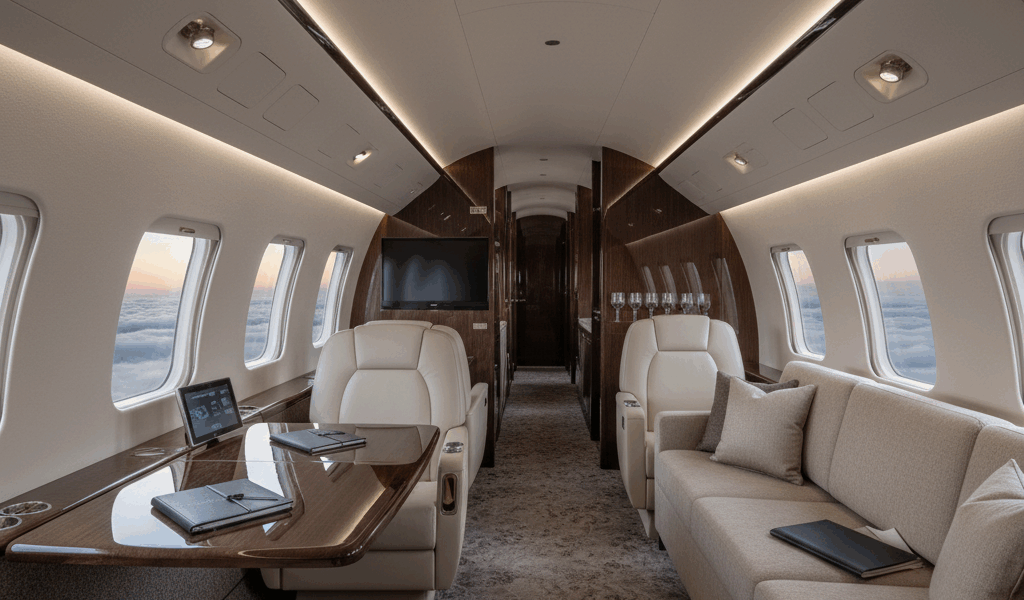
The Falcon 10X’s cabin cross-section — 109 inches wide, 74 inches tall — is the widest of any purpose-built business jet. Probably should have led with what that actually means in practice, honestly. It allows for seating configurations, galley spaces, and lavatory designs that simply cannot be accommodated in narrower cabins. Rival large-cabin jets from Bombardier (Global 7500) and Gulfstream (G700) offer impressive range and amenities, but the 10X’s cabin width creates a different interior experience.
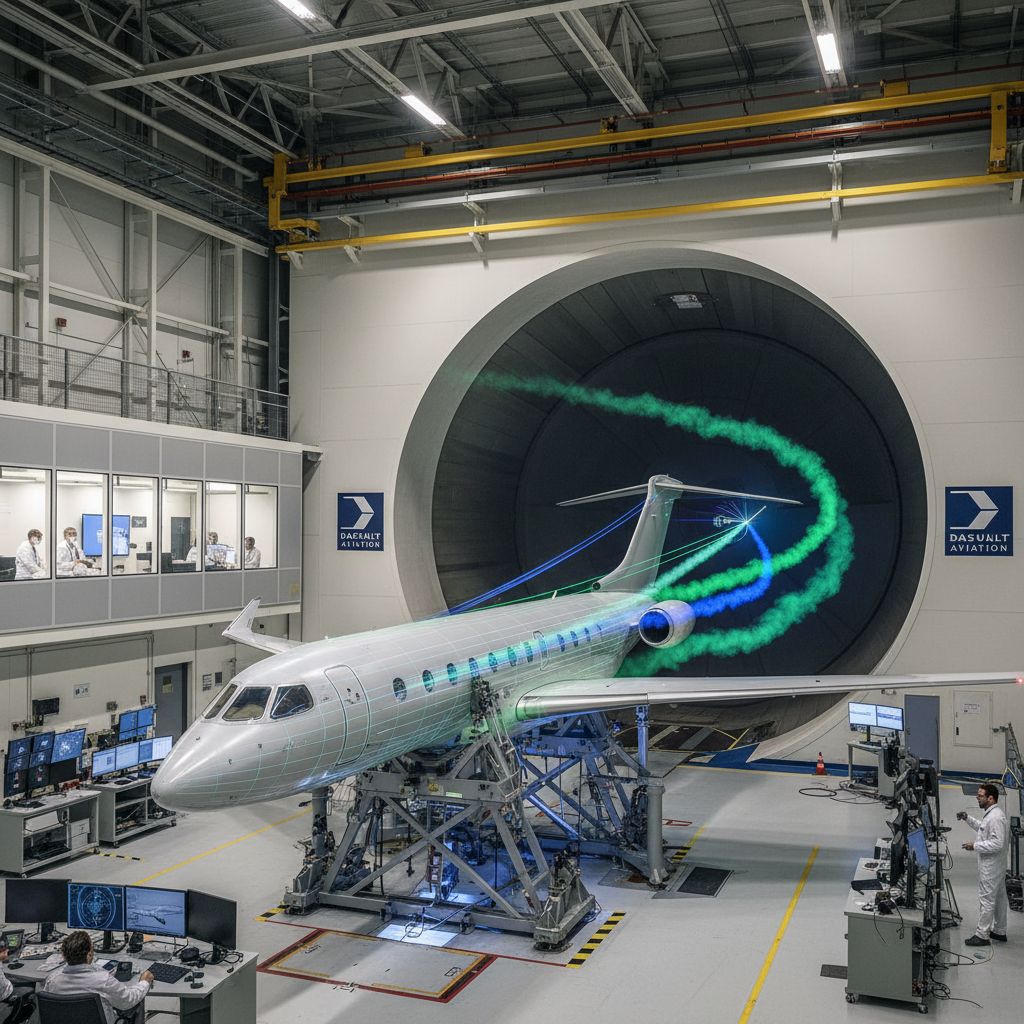
Range is rated at 7,500 nautical miles — enough to fly London to Sydney nonstop with a favorable wind, or New York to Singapore in a single leg. That range envelope makes the 10X genuinely global in a way most large-cabin jets cannot claim. The GE Passport engines that power it are modern high-bypass turbofans designed specifically for the Falcon 10X program, delivering fuel efficiency improvements that extend both range and payload capability. That’s what makes the 10X’s specifications endearing to us who track business aviation — it’s not one record, it’s several at once.
The Dassault Philosophy
Dassault builds both military jets — including the Rafale fighter — and business jets, and the company has consistently claimed that this dual-stream approach benefits both product lines. The aerodynamic refinement and structural engineering required for a high-performance military aircraft translates into wing designs and fuselage engineering on the business side that competitors who build only business jets cannot fully replicate.
The Falcon 10X specifically incorporates a novel wing design with a sharper leading edge sweep that reduces drag at cruise speeds while maintaining acceptable low-speed handling for approach and landing. I’m apparently one of the few people who finds the military-civil technology crossover more interesting than the interior design choices — though the interior design choices are also genuinely impressive.
The Interior: Where the Differentiation Lives
In the large-cabin business jet segment, the interior is the product. The airframe is the container; the interior is the experience. Dassault has pursued a strategy of offering maximum flexibility in the 10X’s interior configuration rather than prescribing specific layouts. The fuselage is long enough to accommodate multiple distinct cabin zones — typically a forward working area, a mid-cabin seating and dining section, and an aft bedroom — with enough remaining space for a galley and lavatory that don’t feel compromised.
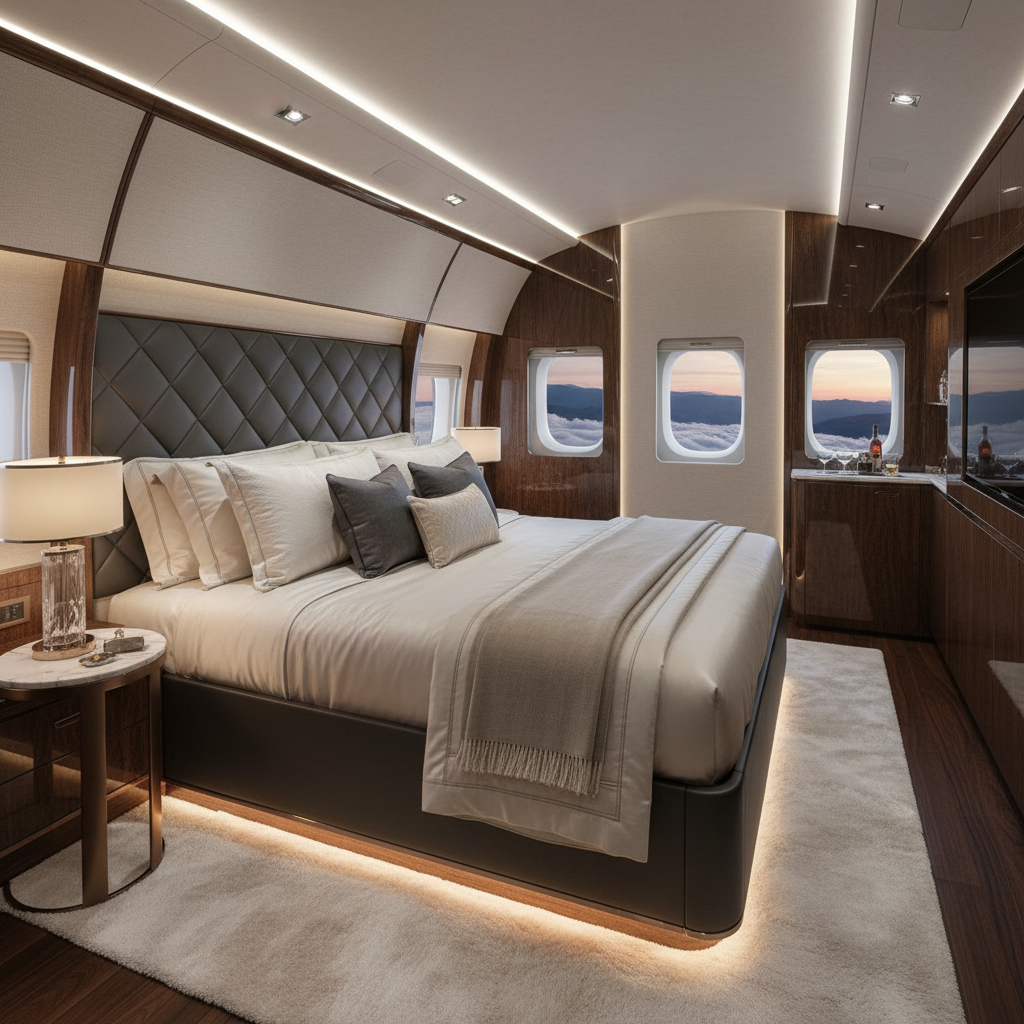
Frustrated by business jet bedrooms that require awkward positioning to use effectively, the 10X’s cabin height in the bedroom section allows a proper bed with full stand-up height above it. On flights of 12-16 hours, the ability to sleep in a proper bed — not a flat seat, but an actual bed — and arrive reasonably rested is a productivity argument that resonates with the people who actually use these aircraft for business travel rather than leisure.
Competition at the Top End
The Falcon 10X competes directly with Bombardier’s Global 7500 and Gulfstream’s G700. The Global 7500, which entered service first, has accumulated a commercial record and a strong reputation for build quality and service support. The G700 offers Gulfstream’s design DNA and an extensive service network that buyers accustomed to the brand value highly. The 10X is the newest entrant with the advantage of incorporating technology that earlier designs cannot match, but it also has a shorter customer service track record.
At this price level — with aircraft pricing well above $100 million — the purchase decision involves more than comparative specifications. It involves relationships with manufacturers, assessment of service and support capabilities, and in many cases, individual preferences of the principal who will actually use the aircraft. Dassault’s reputation was built on the 7X and 8X; the 10X is an argument that the company can compete at the absolute top of the market. Whether that conclusion proves correct commercially will be revealed over the next decade of production.



Stay in the loop
Get the latest wildlife research and conservation news delivered to your inbox.