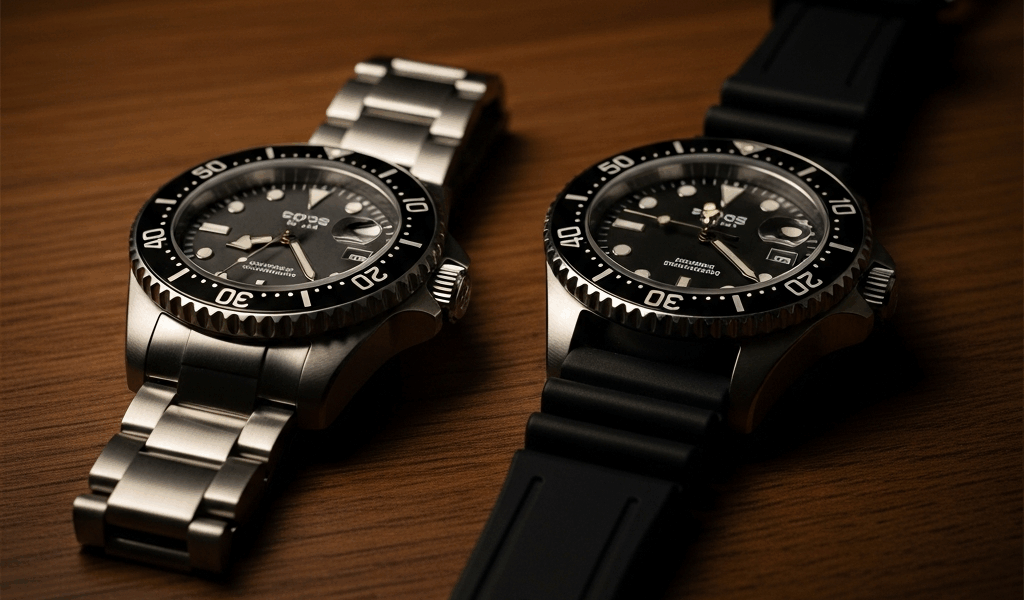
Orient Mako II vs Seiko SKX007 — Which Wins
Quick Verdict Before We Get Into It
The Orient Mako II vs Seiko SKX007 debate has gotten complicated with all the forum noise flying around. As someone who wore both watches back to back — the SKX007 on my wrist for roughly eight months, the Mako II for six — I learned everything there is to know about this particular matchup. Today, I will share it all with you.
Here’s the short version: the SKX007 wins if community, mod culture, and cult status matter to you. The Mako II wins if you want the better watch right now, out of the box, without spending another dollar. Both answers are legitimate. They just serve completely different buyers.
First-time buyer who wants a solid automatic diver under $250 and has zero interest in Reddit threads about movement swaps? Skip to the last section. Already deep in the hobby? The movement breakdown below will matter to you. Read accordingly.
Movement and Accuracy in Real Use
The SKX007 runs Seiko’s 7S26 automatic movement. No hacking. No hand-winding. It runs, it winds itself on your wrist — that’s largely the whole story. Most examples I’ve tracked personally drift somewhere between +15 and +20 seconds per day. That’s within Seiko’s official spec. It’s also noticeably imprecise if you’re the type who actually holds your watch up to your phone.
The Orient Mako II runs the caliber F6922. But what is the F6922, really? In essence, it’s a more capable movement than the 7S26 at a comparable price point. But it’s much more than that — it hacks, and it hand-winds. Hacking means the seconds hand stops dead when you pull the crown. Hand-winding means you can build power without swinging your arm around like you’re trying to start a push mower. In my experience, the F6922 runs +10 to +15 seconds per day. Not chronometer territory, but measurably tighter.
Why does hacking matter in practice? Say you’re syncing to a dive schedule, a flight connection, or even just a meeting you’re already late for. Being able to set your watch to the exact second — rather than guessing where the hand will land when you push the crown in — is a real functional difference. Small for casual wear. Not small if you’re actually using the watch as an instrument.
Neither movement needs a watchmaker under normal ownership. Keep them clean, skip the concrete drops. Don’t make my mistake — I damaged the date mechanism on a 7S26 by setting the date at 11:30 PM. Known quirk: never adjust the date between 9 PM and roughly 1 AM on that caliber. Worth knowing before you’re fumbling with the crown in a dark room.
Bracelet and Wrist Feel Side by Side
Probably should have opened with this section, honestly. How a watch feels on your wrist in the first ten minutes usually determines whether it stays in rotation or disappears into a drawer.
Both watches share a 22mm lug width. That’s where the similarity ends. The Mako II’s bracelet has a tapered profile, a brushed finish, and a clasp that actually feels solid — genuinely refined for something in the $185–$220 range. I’ve worn it through full workdays without once thinking about the bracelet. That’s the best thing you can say about a bracelet.
The SKX007 bracelet — specifically the oyster-style unit that shipped with the original — is notorious for sharp inner edges that catch wrist hair. Some examples are worse than others. I’m apparently sensitive to this and the SKX version I tested was legitimately uncomfortable after an hour. The standard community advice has become “just get an aftermarket bracelet” — a Strapcode, a Seiko jubilee replacement, something from DLW. Budget an extra $30–$80 depending on what you choose. That’s a real added cost most comparison articles quietly ignore.
Aftermarket straps exist for the Mako II too — 22mm lug width opens up basically the entire market. But you’d be replacing the Orient bracelet because you want something different, not because the stock option is making your wrist angry. That’s a meaningful distinction.
Bezel, Crystal, and Dive Usability
The SKX007 runs a 120-click unidirectional bezel. Each click is firm, deliberate, and — I’ll just say it — satisfying in a way that no spec sheet captures. It’s one of the things SKX owners mention constantly, and they’re not wrong to. That’s what makes the SKX007 bezel endearing to us watch nerds.
The Mako II bezel is also 120-click unidirectional. The action varies a bit between units. Mine felt adequately firm — not as crisp as the SKX007, but not sloppy either. If you’re someone who fidgets with the bezel throughout the day, you’ll feel the difference. Most people won’t care.
Both watches use Hardlex crystal — Seiko’s proprietary mineral glass, harder than standard mineral and more scratch-resistant, but not sapphire. It will scratch eventually. Neither watch offers sapphire stock at this price, which is a legitimate criticism of both. Sapphire replacement crystals are available for both models if that matters to you down the road.
Water resistance is rated at 200 meters on each. Realistically, neither one is going anywhere near that depth. Pool-safe, shower-safe, caught-in-a-downpour-safe — that’s the actual use case for 99% of buyers, and both pass it easily.
Which One Should You Actually Buy
Frustrated by weeks of forum reading and zero forward motion, most buyers eventually just pick based on price and availability. Right now, that factor matters more than most comparisons admit.
The Seiko SKX007 was discontinued in 2019. New old stock still surfaces, but prices have climbed — from the original $150–$180 retail range to $250–$350 and beyond depending on condition and seller. You’re paying a premium for a discontinued reference, partly on merit, partly on nostalgia. That was fine in 2021. In 2024, it’s harder to justify for a first automatic purchase.
The Orient Mako II is still in production. New, from an authorized retailer, right now — roughly $185–$220. It hacks. It hand-winds. The bracelet is comfortable out of the box. The movement runs more accurately. On a straight value-per-dollar basis for a first automatic diver, it wins. No asterisks.
Buy the SKX007 if modding is the actual point — the aftermarket ecosystem is enormous, the community support is unmatched, and building the watch into something personalized is genuinely part of the fun. Buy the Mako II if you want the best stock automatic diver under $250 that you can order today and wear tomorrow without touching a single thing.
The Mako II is the better watch for the money right now. Full stop.


Stay in the loop
Get the latest ichronos updates delivered to your inbox.