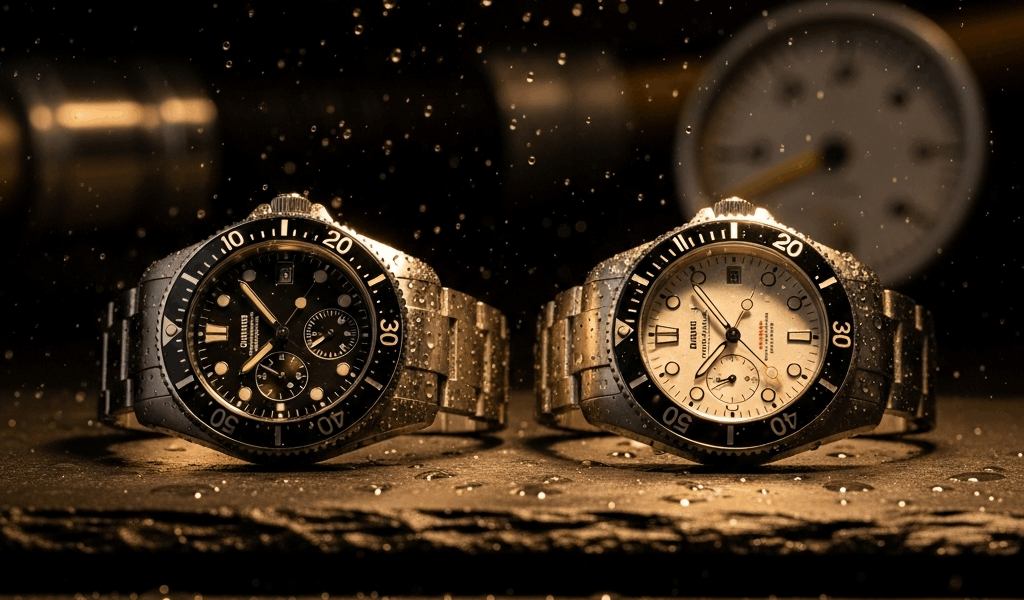
Orient Kamasu vs Seiko SKX007 — The Budget Dive Watch Showdown
The orient kamasu vs seiko skx007 debate has gotten complicated with all the contradictory forum noise flying around. As someone who owns both watches right now — one sitting pristine in my box, the other scratched from a concrete wall incident I’d rather not revisit — I learned everything there is to know about this particular comparison the hard way. Bought the SKX first. Loved it. Assumed every cheap diver would disappoint by comparison. Then the Kamasu proved me wrong in specific ways I genuinely didn’t see coming.
This article includes affiliate links. We may earn a commission at no extra cost to you.
Our Top Picks
This section includes affiliate links. We may earn a commission at no extra cost to you.
Orient Kamasu Automatic Dive Watch
Sapphire crystal, 200m water resistant, green dial
$232.00
Check Price on AmazonQuick Verdict — Kamasu for New Buyers, SKX for Collectors
Short answer first. If you want a dive watch today, brand new, under $300, the Orient Kamasu wins. Full stop. Sapphire crystal included, runs reliably, ships around $250–$280 depending on where you order. You can buy one this afternoon and it arrives perfect.
The Seiko SKX007 is a different conversation entirely. Seiko pulled it from production in 2019, and used prices have done strange things since. Anywhere from $200 on a lucky eBay day to $400 for a pristine example with the original bracelet and box. That range matters — a lot — when you’re deciding whether the SKX is actually worth chasing right now.
Here’s where I land after owning both: the Kamasu is the smarter practical purchase. The SKX007 is the more interesting watch. Those aren’t the same thing. Conflating them is the mistake most buyers make when they start going down this research rabbit hole.
- Buy the Kamasu if you want a reliable, scratch-resistant, new-in-box diver without playing the used-market lottery
- Buy the SKX007 if you’re drawn to its cultural weight, its massive mod community, and you’re comfortable carefully evaluating used condition
- Skip the SKX if you’re expecting to pay $200 and receive a pristine example — that deal exists, but it requires patience and honestly some luck
Probably should have opened with this section, honestly. Most people skimming this just need that answer and can move on. The rest of you want to understand why — so let’s get into it.
Case and Comfort — What Actually Fits Your Wrist
The spec sheet says SKX007 runs 42.5mm, Kamasu is 41.5mm. One millimeter sounds meaningless until you put both on a smaller wrist and feel the lug-to-lug difference. SKX clocks 46mm across. Kamasu is 43.5mm. That extra 2.5mm is where the real distinction lives — not the diameter number everyone obsesses over.
I have roughly 6.75-inch wrists — medium, maybe slightly small for dive watch standards. The SKX wears large on me. Not unwearable, but it hangs past the lug line noticeably. The Kamasu sits cleaner. Under 6.5 inches, the Kamasu is honestly the better fit without any modification. Above 7 inches, both wear comfortably and the SKX starts to feel proportionally right — almost like it was built for bigger wrists specifically.
The Bracelet Situation
Both watches ship on bracelets. Neither bracelet is particularly good — don’t make my mistake of assuming otherwise and skipping an aftermarket strap budget. The SKX007’s original Jubilee or oyster-style bracelet has a rattly, hollow reputation that’s been well-earned over twenty years of forum complaints. Enthusiasts have been swapping them out since roughly 2004, so the upgrade path is extremely well established. The Kamasu bracelet is fine — solid enough — but most owners replace it with leather or an aftermarket metal option within a few months anyway.
What the SKX has that the Kamasu doesn’t: decades of aftermarket bracelet and strap options designed specifically for its 22mm lug width. You’ll never struggle finding the right strap. The Kamasu takes standard 22mm straps too, but purpose-built Kamasu-specific options are noticeably fewer. That’s what makes the SKX’s modding ecosystem endearing to us budget diver enthusiasts — years of accumulated aftermarket infrastructure that Orient simply hasn’t had time to build.
Water Resistance
Both are rated to 200 meters. Neither is something I’d bring on an actual scuba certification dive unless I was genuinely indifferent to the risk — but both handle swimming, surfing, and shower exposure without drama. I’ve taken the Kamasu into the ocean. No issues. The SKX has logged similar time in saltwater for plenty of owners without complaint.
Crystal — Sapphire vs Hardlex
This is the most important practical difference between these two watches. The Kamasu’s sapphire crystal is a meaningful advantage in daily wear — full stop.
Dragged across a concrete wall at a crowded outdoor event — that’s how my SKX007 picked up its most prominent scratch. I was carrying a bag, turned wrong at the wrong moment, and the crystal caught the edge of the wall. The mark isn’t deep, but it’s visible in certain light. Hardlex, Seiko’s proprietary mineral glass, is more scratch-resistant than standard mineral crystal — but nowhere near sapphire. Sapphire scores a 9 on the Mohs hardness scale. Only diamonds scratch it under normal conditions. My Kamasu crystal still looks pristine after two years of regular wear including outdoor work and travel.
But what is the SKX counterargument here? In essence, it’s that Hardlex is cheap to replace. But it’s much more than a simple cost comparison. You can buy a replacement SKX crystal for $15–$30, and a watchmaker swaps it for another $20–$40. So even badly scratched, the fix is inexpensive. The Kamasu sapphire, if somehow cracked or shattered, costs more to replace — though sapphire is shatter-resistant and far less prone to the kind of impact damage that would actually require replacing it.
My honest take: in the real world, the Kamasu crystal wins. The SKX argument works on paper, but in practice most SKX owners are walking around with scratched crystals they haven’t gotten around to replacing. Sapphire removes that variable entirely.
Movement Face-Off — F6922 vs 7S26
Neither movement will impress a mechanical watch purist. That’s fine. We’re not shopping for a purist’s collection — we’re buying reliable budget divers that can take some abuse.
The Seiko 7S26, powering the SKX007, is one of the most field-tested automatic movements in affordable watchmaking history. Seiko introduced it in 1996 and ran it for decades — serviced in kitchens, modified in garages, regulated by hobbyists using YouTube guides and basic tools. The accuracy spec is officially listed at -20 to +40 seconds per day, which sounds rough until you realize most examples in decent condition run closer to ±10–15 seconds daily. Mine runs about +8 seconds per day. Perfectly livable. The movement doesn’t hack — the seconds hand won’t stop when you pull the crown — and hand-winding is awkward at best. Both quirks are well-documented SKX traits that owners either accept or quietly ignore.
The Orient F6922, powering the Kamasu, is a comparable movement. Orient calibers have a solid reputation for accuracy, often outperforming the 7S26 in regulated examples. My Kamasu runs at roughly +5 seconds per day — though that’s one data point, not a scientific conclusion. The F6922 also doesn’t hack. Power reserve on both movements sits around 40 hours, which is enough for a weekend off the wrist but not much more.
The Aftermarket Support Gap
The 7S26 has been running inside watches for nearly thirty years. Watchmakers worldwide know this movement intimately — parts are plentiful, service guides are detailed, forum threads are endless. The F6922 is a capable movement that receives far less community attention simply because Orient’s enthusiast ecosystem is smaller. If something goes wrong, you’re more dependent on Orient’s service center or a watchmaker willing to work on a less common caliber. That gap matters more for some buyers than others.
For most people this is irrelevant — both movements are reliable enough that servicing shouldn’t be necessary for years. But if you’re someone who gets deep into watch mechanics or plans to mod and maintain a watch yourself, the 7S26’s knowledge base is honestly unmatched at this price point.
The Real Question — Buy New or Hunt Used
Here’s where the comparison gets genuinely complicated, and where a lot of online advice misses the point entirely.
The Kamasu at $250–$280 new is a straightforward transaction. You pay a known amount, receive a known product in perfect condition, with a manufacturer’s warranty still attached. Sapphire crystal intact. Bracelet unscratched. Movement not subjected to whatever the previous owner did with their last watch. Clean, low-stress, no surprises.
The SKX007 used market is messier. Prices fluctuate based on condition, documentation, and how well the seller actually understands what they have. A pristine SKX with box and papers can legitimately fetch $350–$400 from a collector who knows its worth. A beater unit with a scratched crystal, worn bracelet, and unknown service history might go for $200–$220. Don’t make my mistake — I paid $280 for an SKX described as “mint condition” that arrived with visible lug scratches and a bracelet with stretched links. Not a disaster, but definitely not what I paid for.
When the SKX Premium Makes Sense
Pay the used premium for the SKX007 if you want to participate in its mod community — because that community is genuinely unparalleled in budget diving watches. Custom bezels, chapter rings, dials, hands, crystals, entire replacement cases. You can turn an SKX into something completely unique for less than the cost of a mid-range watch. Frustrated by the limited options on most budget divers, SKX enthusiasts spent two decades building out an aftermarket ecosystem using basic tools and cheap online parts — and it eventually evolved into the modding culture enthusiasts know and celebrate today. The Kamasu community is much smaller, and available parts are correspondingly limited.
The SKX also carries cultural weight that Orient simply hasn’t built yet. Wearing one around other watch people gets a knowing nod. It’s a reference point with actual history behind it. For some buyers that matters — and there’s nothing wrong with it mattering.
When the SKX Premium Doesn’t Make Sense
Don’t pay SKX used prices if you just want a reliable daily diver and the Seiko name on the dial is what’s actually driving the decision. The Kamasu does everything the SKX does functionally, adds the sapphire crystal advantage, and removes the used-market risk entirely. Paying $350 for a scratched SKX when a new Kamasu at $260 is sitting there with no miles on it — that’s brand preference, not practical value.
There’s also the trajectory question. The SKX’s discontinued status has pushed prices up, and that trend will probably continue as clean examples become scarcer. You’re not buying something that’s going to sharply depreciate — but you’re also not buying a documented investment-grade timepiece. It’s a used watch with a great reputation. Price it accordingly.
Final Thoughts — They’re Both Good Watches, but for Different Reasons
After two years wearing both, I reach for the Kamasu more often. The sapphire crystal removes the low-grade anxiety about scratches that comes with wearing the SKX on anything rougher than desk duty. Accuracy is slightly better in my examples. It looks cleaner longer with less maintenance. That’s what makes the Kamasu endearing to us practical daily-wear buyers — it just handles life without requiring much thought.
But the SKX sits in the box for a reason. It’s more interesting. The history, the community, the modding potential, the fact that mine has been on my wrist in four countries and still keeps reasonable time — there’s something to its reputation that numbers alone don’t capture.
The Kamasu might be the best option for new buyers, as budget dive watch shopping requires avoiding used-market uncertainty. That is because a $260 watch with a factory warranty and a pristine sapphire crystal is genuinely hard to argue against. Hunt the SKX if you’re a collector with patience and a specific reason to want it. Either way, you’re choosing between two of the best mechanical dive watches available under $400 — and that’s a genuinely good position to be making choices from.

Stay in the loop
Get the latest ichronos updates delivered to your inbox.